
AI Challenge results
Concrete, efficient, and practical AI solutions provide a lasting boost to the competitiveness of the manufacturing industry.
The AI Challenge in the Ostalbkreis was aimed at companies that wanted to use artificial intelligence to rethink a specific task from their day-to-day operations.
The focus was on real-world operational challenges:
How can production processes be made more robust and efficient?
How can warehouses, supply chains, and material flows be better managed?
How can knowledge be preserved within the company and made usable in practice?
Resource-efficient production
Our event partners and advisory board members





The AI Challenge theme of our region
In the Ostalbkreis district, the focus was on how the use of artificial intelligence (AI) can help achieve a more efficient use of resources in production.
There were many points of connection, particularly in the area of production. Whether it was quality assurance, production planning, logistics optimization, circular economy, or knowledge management, the participants brought their own questions to the table and worked with experts to develop initial solutions.
The following aspects were addressed:
• How can AI help save resources and energy in production?
• How can AI support quality management in companies?
• Can AI solutions help improve efficiency in production as well as in warehousing and logistics?
• What potential does data offer for implementing the next steps toward AI application?
Our topics
In interactive workshops, potential solutions were developed across four key thematic areas (TA)—all of which offer direct benefits to the Ostalbkreis:
Topic #1 – Production Planning and Product Quality
Optimizing production planning has always been an organizational and technical challenge, as it depends on a wide range of external factors that manufacturing companies can only partially influence or even control. Important factors include, for example, material availability, personnel capacity, production facility utilization, and, of course, the fulfillment of received orders with their delivery times.
Optimization methods depend significantly on what reliable information is available for the individual areas, at what level of granularity planning takes place, and how quickly unexpected events must be addressed.
Existing scheduling algorithms often reach their limits here due to long runtime and limited computing capacity. This TS aims to investigate the extent to which AI methods can offer alternative approaches and achieve improvements.
In addition, this technical seminar addresses the topics of quality assurance, quality control, and quality forecasting, as well as AI-supported production, particularly for small-batch production.
Topic leader: Benedikt Stratmann (Fraunhofer IOSB)
AnormAI – Anomaly Detection Along the Production Chain
DEVELOPMENT
Project objective
The goal of the project is to develop a data-driven system for monitoring the production chain. The system is designed to enable the early detection, resolution, and prevention of malfunctions.
DEVELOPMENT
AI system and data
Real-time analysis of production data to detect or prevent errors at an early stage:
- Anomaly detection
- Model Predictive Control

Value proposition
- Waste reduction
- Resource-efficient
- Higher quality standards
- An opportunity to learn about the production chain and plant performance
OPERATION
Business model
Reducing production costs for our own products.
OPERATION
Resources and partners
Resources:
- Historical
- Production data
- Test facility
- data infrastructure
Partner (internal):
- Production Manager
- Quality Assurance Manager
The production chain of an automated and digitized manufacturing process generates a vast amount of production data. It is not uncommon for more than 1,000 different characteristics to be recorded per product. In mass production, up to 10,000 products are manufactured per hour. This data should be used to increase the plant’s productivity.
Since throughput in large-scale production has already been optimized at the equipment level, the data-driven application is designed to detect errors in the production chain at an early stage, thereby reducing scrap and downtime. The sheer volume of data makes it difficult to analyze the characteristics of each product. However, the data can be used to monitor the production chain and detect anomalies in real time.
Another approach involves using a model trained on production data to control the plant. In what is known as model predictive control (MPC), the plant’s behavior in the near future is predicted using the model, and the optimal control parameters are calculated. The goal of this approach is not only to detect errors early on, but also to prevent them.
SmoothKitchen – Production Planning in the Furniture Industry
DEVELOPMENT
Project objective
- Reduce capacity fluctuations
- accurate prediction of processing times
- rapid failure compensation
DEVELOPMENT
AI system and data
Pattern Recognition/Cluster Analysis:
- Estimated/actual time required
- Processing bottlenecks
- Downtime
Data:
- selected configurations
- Machine capabilities
- Processing times
- Loading days
Value proposition
- Reduction in backorders
- More satisfied customers
- no overloading of workstations
- risk mitigation
OPERATION
Business model
- cost reduction
- internal development
- Capacity Dashboard: Automatic Capacity Notifications to Sales
OPERATION
Resources and partners
Resources:
- Order details
- Machine data, motion data (history)
- Data Sheets
Partners:
- Work Planning
- Production
- Supplier
Built-in kitchen units are almost always custom-made, either in small batches or as one-off pieces. The design options in terms of colors, shapes, and functionalities are very diverse for customers. The desired kitchen furniture must then be manufactured as efficiently and cost-effectively as possible. A wide range of data is incorporated into order planning, such as inventory levels, color, material, cutting, edging, milling, drilling, doweling, final assembly, and packaging. In addition, the capabilities and speeds of the various machines, as well as the logistics between work steps, must be taken into account. Optimally utilizing machines and accurately planning delivery dates is therefore a highly complex task; due to the uncertainties involved, standard mathematical methods are not suitable for solving this problem.
The SmoothKitchen project aims to achieve improved capacity utilization through AI-driven integration and analysis of various data sources, to avoid both overcapacity and undercapacity, and to be able to quickly adjust operations even in the event of machine or staff absences. There is extensive data from completed orders that can be used to train the AI; applicable techniques here include pattern recognition and cluster analysis to identify correlations between characteristics of the order data and the actual production process.
The goal is to develop an assistance system (e.g., a sales dashboard) that can predict capacity utilization in real time, effectively compensate for machine downtime and staff absences, and reliably forecast whether desired delivery dates can be met. The initial steps (reviewing and evaluating the data) to prepare for a grant-funded project or a direct development contract are already underway.
Topic #2 – Warehouse and Logistics Optimization
This TS focuses on optimization issues that do not relate directly to production but rather to inventory management, while also taking into account supply chains and their sustainability and resilience. Project ideas will be discussed on the following topics:
- Supply Chain Management
- Transparency, Interdependencies, Risk Management
- Calculation of sustainability metrics (including carbon footprint and digital product passport)
Session Chair: Dr. Jan Burke (Fraunhofer IOSB)
LOG-AI – Warehouse and Logistics Optimization

DEVELOPMENT
Project objective
Locating pallets in front of machines using tags
Creating dynamic task lists with task prioritization
DEVELOPMENT
AI system and data
Visualization of the location of the load carrier in the warehouse
Access to the order list and use of that list to prioritize the next steps
Value proposition
Optimized logistics processes
Increased productivity
Higher on-time delivery rate
Shorter downtime
Further process digitization lays the groundwork for future AI projects
OPERATION
Business model
Cost savings through process optimization
Increased employee satisfaction through reduced mental stress
OPERATION
Resources and partners
An internal project that involves production staff, logistics and warehouse personnel, production management, and the IT department in equal measure.
In a production environment, orders are processed across multiple resource levels. Each resource works with its own worklist in the ERP system. Material provision is handled digitally only for the first step; all subsequent supply steps are organized manually. Detailed planning itself is carried out using paper and direct coordination. Production orders are currently still tracked on paper using job tickets, which makes real-time transparency and automatic interventions in the process difficult. There is no active feedback regarding when staging areas are available.
Common challenges:
- Logistics does not identify a clear prioritization of deployments
- Production receives orders before materials are available
- No digital control between processing steps
- Long walking distances due to a lack of feedback on available parking spaces
How can AI help:
- Dynamic priority list and optimized order processing sequence
- Locating orders in front of the machines and indicating available staging areas
Topic #3 – Circular Economy
This TS focuses on the requirements and technologies needed to implement a circular economy, particularly in battery production. The following aspects are emphasized:
- Development and Use of Digital Product Passports for Batteries and Rechargeable Batteries (including the EU Battery Regulation 2023/1542)
- Quality Optimization in Battery Production
- AI-powered R strategies for batteries
- AI-assisted battery disassembly
Topic Chair: Dr. Christian Kühnert (Fraunhofer IOSB)
Theme #4 – Knowledge Management for Resource Efficiency in Production
This TS is dedicated to the general topic of knowledge management. How can existing knowledge within companies be permanently preserved, even in times of a skills shortage? How can new knowledge be extracted from existing production data and the data generated daily, validated, and communicated in a way that is tailored to specific target groups? The following aspects will be addressed:
- AI-powered software development (including PLC programming)
- AI-driven optimization of efficiency metrics (including energy and material efficiency)
- Supply Chain Resilience and Sustainability
- AI-powered creation of digital product passports
Topic leader: Philipp Hertweck (Fraunhofer IOSB)
Fabriq – Knowledge Management

DEVELOPMENT
Project objective
Development of a system for analyzing downtime and providing recommendations for action.
DEVELOPMENT
AI system and data
Processing and Analysis of Text Documents
Identification of correlations
Derivation of recommendations for action

Value proposition
- Faster troubleshooting and fault diagnosis
- Derivation of recommendations for action
- Preventing/reducing downtime
- Reduction of waste
OPERATION
Business model
Savings achieved through:
reduced downtime
Quality Improvement
OPERATION
Resources and partners
Resources:
- Production data
- Shift Information
Partner (internal):
- Production Managers
- Production workers
- IT Managers
Production downtime and quality defects cause significant financial losses for manufacturing companies. Extended downtime is particularly critical when malfunctions cannot be quickly analyzed and resolved. Success depends on the ability to promptly identify the causes of faults and implement targeted corrective measures to get production back up and running quickly.
The main challenges stem from the fragmented nature of the data, which is scattered across various IT systems and exists primarily in unstructured text documents. Compounding this is a lack of knowledge consolidation, as problem-solving expertise exists solely as implicit expert knowledge and is not systematically documented.
The project aims to develop an AI-based platform for automated root cause analysis and recommendations for action. By intelligently analyzing available production and shift data, the solution is designed to independently identify the causes of faults and provide specific instructions for action. This enables a significant reduction in response times and speeds up the resumption of production operations.
In a nutshell:
- Root cause analysis for production process failures and quality issues
- By leveraging insights from various data sources -> Deriving recommendations for action
- Heterogeneous, partially unstructured data set; no automated analysis processes
1. Structuring existing documents (e.g., shift logs)
2. AI-supported root cause analysis + derivation of recommendations for action
Become part of our network!
The AI Alliance Baden-Württemberg’s community management team works to bring together business, academia, and government in the region to promote the exchange of knowledge and the application of AI technologies. The AI Alliance’s community management team is also represented in the Ostalbkreis region.
Are you interested in a particular result or topic and would like to learn more or get involved?
Then please contact our Community Management team for the Ostalbkreis region:
Frida Akulova-Lebedev
frida.akulova@ki-allianz.de
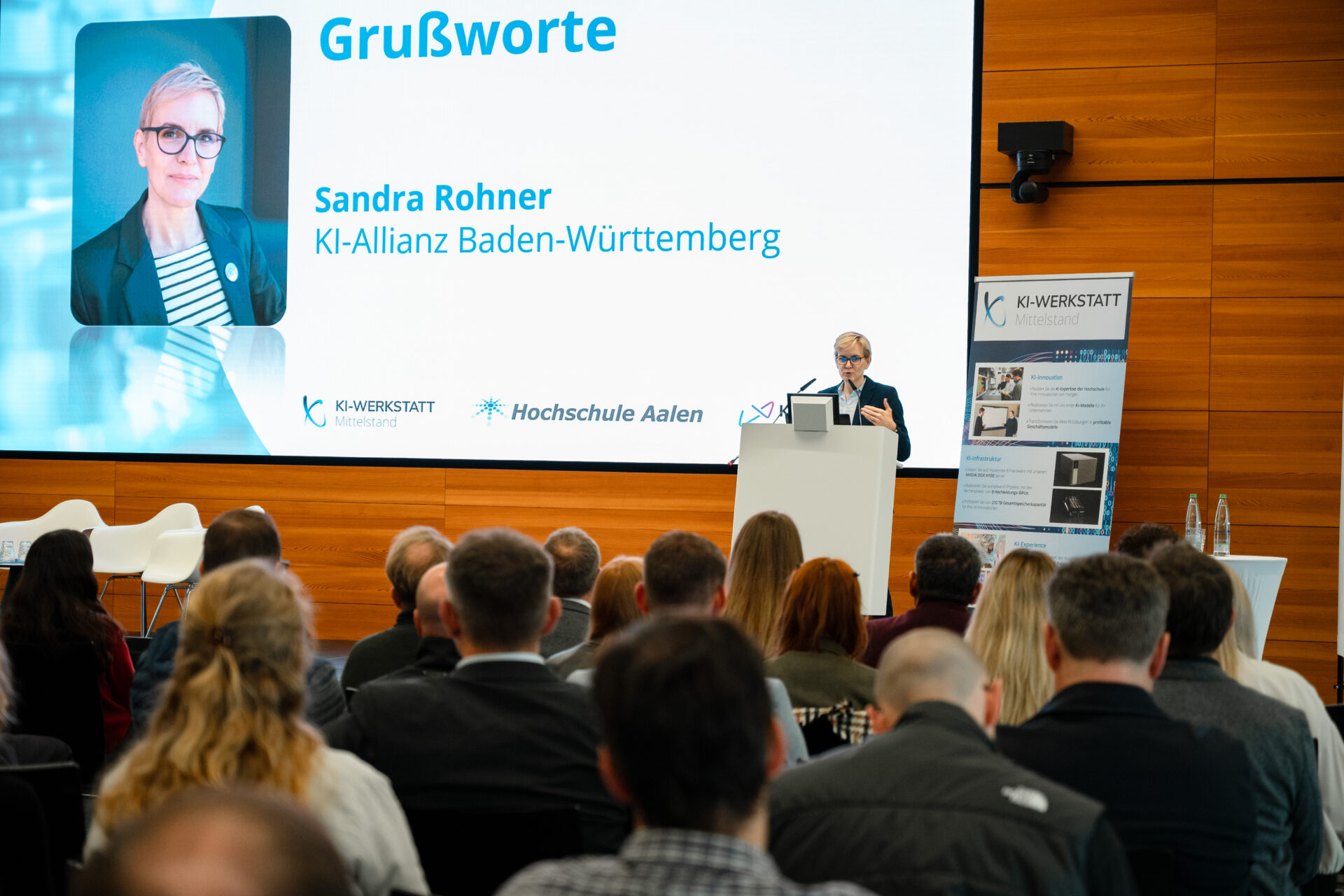
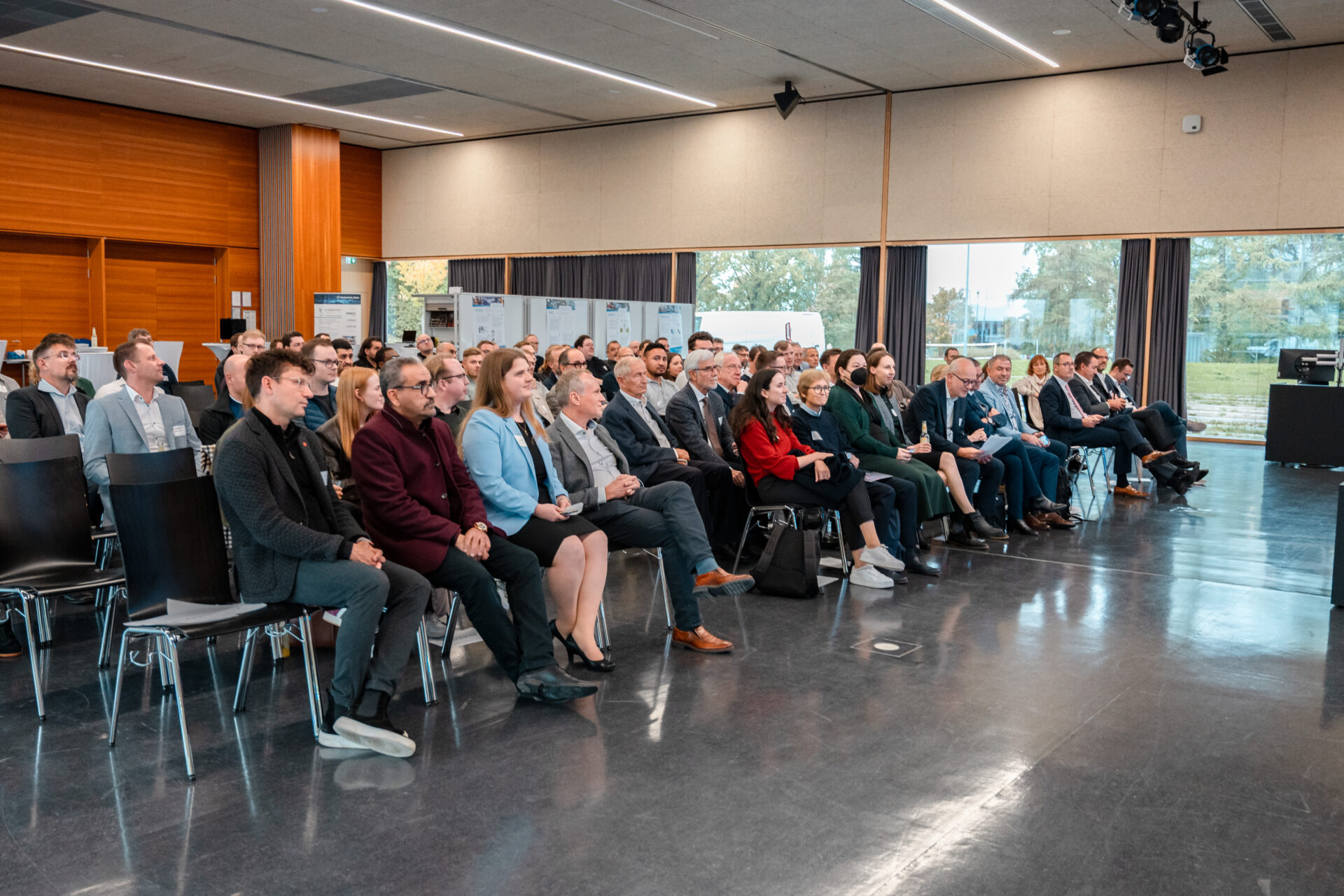
Highlights and reactions from "Resource-Efficient Production"

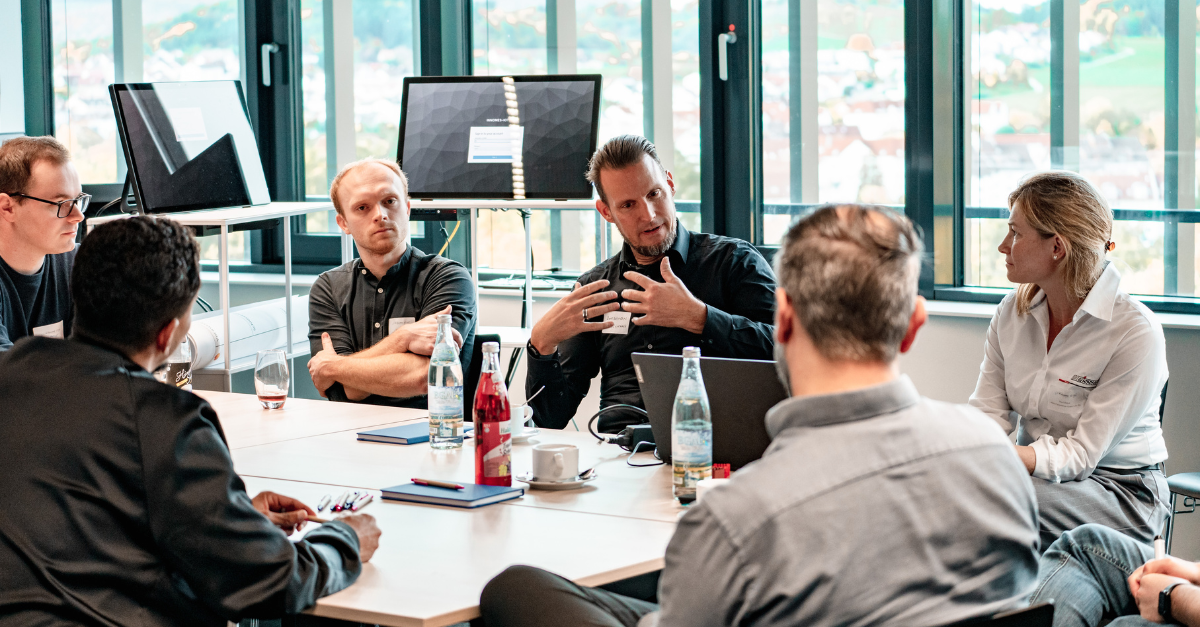


We are all dependent on each other.
Johannes Arnold Lord Mayor of the City of Ettlingen
The great thing about AI (artificial intelligence) is that I can bring many aspects together.
Dr. Frank Mentrup, Lord Mayor of the City of Karlsruhe
How can AI help us ask the right questions?
Markus Wiersch, Deputy Managing Director of Karlsruhe Marketing Event GmbH
What is special about this workshop format is that the providers do not develop solutions that can subsequently be offered to users, but that users themselves are directly involved in the design.
Thomas Usländer, project manager of the AI Challenge
Our plan worked. The participants were inspired by the kick-off event and there was a lack of time, not a lack of ideas.
Akiza Hagami, Community Manager of the Baden-Württemberg AI Alliance