
AI Challenge results
Intelligent, sustainable events are a decisive step towards a future-proof event culture.
From smart energy and waste management to a digital event platform and sustainable mobility: the diverse approaches show how creative concepts can contribute to a greener event industry.
Smart-Eco Events
Our event partners
The KI-Allianz Baden-Württemberg eG and Fraunhofer IOSB organize Smart Eco-Events in cooperation with karlsruhe.digital and Wirtschaftsförderung Ettlingen.
The aforementioned players were also part of the advisory board for the KI-Challenge Karlsruhe.

Our advisory board members







The AI Challenge theme of our region
The event industry is a key economic factor for the Karlsruhe region. For the organization and acquisition of future events such as conferences, trade fairs, music and sports events, it is becoming increasingly important to focus on the topic of sustainability. This raises the following questions, for example:
- How can I usefully incorporate the topic of sustainability into the preparation and planning of events?
- How can I enrich the customer journey with sustainability topics and thus enable a more comprehensive cost/benefit comparison for event participation?
- What ecological footprint (e.g. CO2) will the event generate?
- How can you keep it to a minimum and still put on an attractive event?
- How can AI processes be used specifically for these aspects?
In the "Smart Eco-Events" AI challenge, key stakeholders in the event industry from the region were invited to present their requirements, data offerings and (AI-based) solution ideas in this regard and to work together to turn them into concrete project ideas. This provided food for thought for downstream AI projects.
Our topics
The workshop is divided into four thematic strands: mobility, locality, (supply chain) material management and event platform.
Discover the project exposés from the individual thematic strands and be inspired by the diverse approaches.
Topic #1 - Mobility
Mobility plays a decisive role in the overall assessment of an event's sustainability.
How do participants get to and from the event venue?
The Karlsruhe region is a pioneer in linking local and regional public transport services. Knowledge about the mobility needs of participants could help event organizers to expand these services to include innovative, event-specific and situational mobility services with a focus on sustainability, comfort, reliability and personalization.
Topic lead: Dr. Uwe Zeltmann (Fraunhofer IOSB)
MoveInsight - Artificial intelligence for sustainable tourism mobility in Karlsruhe

DEVELOPMENT
Project objective
Dashboard for the analysis of tourist mobility, insights into traffic management, service optimization and sustainability assessment
DEVELOPMENT
AI system and data
Subsystem for cluster analysis and pattern recognition in motion data, processing via cloud dashboard

Value proposition
Sustainable tourism planning, data-based traffic management, sound decision-making basis for city marketing
OPERATION
Business model
Use in destination marketing and transport planning, financing through state funding and own contribution
OPERATION
Resources and partners
KTG Karlsruhe Tourismus GmbH, raumobil GmbH, Fraunhofer IOSB, KVV, Nextbike, Deutsche Bahn, IT-Partner für Datenintegration, IT-Amt Karlsruhe, Karlsruhe digital
Karlsruhe is an important destination for leisure and business tourism in Baden-Württemberg. Every year, numerous guests visit the city, using various means of transportation and spreading themselves across different tourist attractions. This poses increasing challenges for the city administration, the transport association and tourism marketing: Bottlenecks in the infrastructure, a lack of overview of travel behavior and untapped potential for promoting sustainable mobility. To date, there has been a lack of a reliable, data-supported basis for analyzing and managing visitor flows in a targeted manner and integrating them into sustainable urban development.
The MoveInsight project aims to develop an AI-supported analysis and forecasting system that combines and evaluates anonymized mobility data from various sources. Data from public transport systems, booking portals, Wi-Fi or GPS movement data will be used to obtain a comprehensive picture of tourist mobility behavior. AI methods such as cluster analysis, time series forecasts and pattern recognition are used to identify typical travel patterns, heavily frequented locations and recurring load times.
The system is supplemented by an interactive dashboard that provides the stakeholders involved - including urban planners, transport companies and tourism operators - with easy-to-understand recommendations for action.
The aim is to make both visitor guidance and transport planning data-based and forward-looking. At the same time, sustainable travel options - such as public transport, cycling or sharing services - are to be strengthened and advertised in a targeted manner.
This data-driven basis creates a valuable building block for a sustainable, climate-friendly tourism strategy for the city of Karlsruhe. An interdisciplinary consortium consisting of KTG Karlsruhe Tourismus GmbH, the city administration, KVV and partners from research and IT is planned. The project is to be implemented within 18 to 24 months and offers ideal conditions for funding as part of programs such as mFUND, BW-eMobil or Smart City model projects. The estimated project volume is between 150,000 and 200,000 euros.
GreenStage - Sustainable travel through gamification in theater visits

DEVELOPMENT
Project objective
Sustainability gamification directly at events, reward system for environmentally friendly travel, CO₂ calculator for visitors
DEVELOPMENT
AI system and data
Subsystem for mobility classification, connection to reward/gamification engine
Value proposition
Sustainable mobility is rewarded in a fun way, reducing the CO₂ footprint with a fun factor
OPERATION
Business model
Use in theater app or website, financing through project funds and third-party funds
OPERATION
Resources and partners
Badisches Staatstheater Karlsruhe, raumobil GmbH, Fraunhofer IOSB, theater technology, app developer, transport association
, city, sustainability officer, possibly university (Department of Media Informatics / AI)
Cultural institutions such as the Staatstheater Karlsruhe attract hundreds of visitors every day. The majority of these journeys are currently still made by car - often for reasons of convenience or due to a lack of conscious alternatives. This not only causes traffic congestion in the urban environment, but also considerable emissions.
At the same time, many cultural visitors are becoming increasingly interested in sustainable options - but there is often a lack of low-threshold, motivating impetus to actually use more climate-friendly travel options.
The GreenStage project addresses this problem with an innovative, AI-supported gamification approach: visitors are playfully motivated to come to the theater in an environmentally friendly way - for example by bike, on foot or by public transport - and receive visible rewards for doing so. At the heart of the project is a digital incentive system that is integrated into the existing theater app or website. Visitors register there voluntarily, enter their mode of travel or have it automatically recognized by location data, and in return receive points, status badges or small rewards such as drink vouchers, exclusive content or discounts.
This is supplemented by a CO₂ calculator that visualizes the effect of one's own travel decisions in comparison to the community as a whole.
Artificial intelligence is used to intelligently classify user behaviour, make personalized suggestions for sustainable routes and dynamically optimize interaction via gamification elements.
The aim is to achieve a high impact with as little technical effort as possible - both on the mobility behavior and on the awareness of theatergoers. In addition, the system provides aggregated, GDPR-compliant data that helps the theater to better understand the mobility profile of its audience and to plan future measures in a targeted manner.
MoveSmart Event - AI-supported visitor guidance for major events

DEVELOPMENT
Project objective
Prediction and real-time control of arrivals and departures, optimization of shuttle/traffic, increased safety and reduction of CO₂
DEVELOPMENT
AI system and data
Forecast model, shuttle/traffic control, visitor navigation
Value proposition
Safe, stress-free festival visit, sustainable, controlled arrival, live feedback for organizers and transport services
OPERATION
Business model
Use at various types of events, funding through subsidies and sponsorship options
OPERATION
Resources and partners
raumobil GmbH, Fraunhofer IOSB, organizer DAS FEST, City of Karlsruhe, KVV, police/security services, IT partners, specialists for AI modelling & event logistics
Major events such as DAS FEST in Karlsruhe attract tens of thousands of visitors - with a significant impact on traffic flow, safety and the environment. At peak times, overcrowded trains, long traffic jams, overloaded parking lots and dangerous bottlenecks on the event site are a regular occurrence. In particular, open-air events without their own event app have so far lacked digital control options to react flexibly and preventively to these pressures.
The MoveSmart Event project addresses these challenges with a modular, AI-supported visitor guidance system. The aim is to use intelligent forecasting models and real-time analyses to proactively control both the distribution of arrivals and the movement of visitors on the site.
The core of the project is a three-stage system: firstly, arrival peaks are predicted on the basis of ticket data, weather forecasts and historical visitor numbers. Secondly, an AI module analyzes the actual movement flows during the event - via anonymized location data, Wi-Fi access or voluntary mobile approvals - and continuously generates recommendations for traffic and visitor management. Thirdly, this information is sent both to the event organization (e.g. security, shuttle planning) and directly to visitors via a web app or QR-based notifications.
The project specifically distinguishes between urban and rural event locations, as the requirements for traffic control, public transport availability and data sources differ significantly. The solution can therefore be used flexibly - for festivals, soccer matches, trade fairs or city festivals, for example - and enables data-driven equalization of traffic and crowds. Organizers also receive a real-time dashboard for control and follow-up.
Topic #2 - Locality
The Karlsruhe region has numerous venues for events of all shapes and sizes. These range from cultural events (e.g. Schlossfestspiele Ettlingen) to larger music events (e.g. DAS FEST, SWR3 NewPop Festival) and very large sporting events (e.g. planning for the World Games 2029). How can the sustainability of these event venues be assessed and improved? Which aspects (e.g. energy efficiency, inclusion) are particularly relevant here? What optimizations are possible through the targeted use of AI?
Topic lead: Dr. Andreas Wunsch (Fraunhofer IOSB)
StageEnergy - Energy management for event venues
DEVELOPMENT
Project objective
Development of an energy management system for the special requirements of event venues. Intelligent control should lead to energy and cost savings and support the organizer or venue owner in achieving sustainability goals.
DEVELOPMENT
AI system and data
Analysis of real-time data using machine learning to predict and optimize energy consumption:
Forecasting energy demand and energy supply
Optimized use of TGA and storage technology
Predictive maintenance + monitoring

Value proposition
Cost reduction through intelligent control for the use of volatile energy sources or direct energy savings
Increased comfort for visitors (temperature, noise through ventilation, etc.)
Increasing sales by marketing the sustainability aspect
OPERATION
Business model
Cost reduction and possible increase in turnover for the operator
Distribution of the solution for other venues by the developer(s)
Maintenance and care of the software by the developer
OPERATION
Resources and partners
Technology supplier (EMS developer, optimization provider)
Manager/owner of the location
Energy consultant, possibly specializing in large properties
Planners and contractors for structural adaptations
Trained staff on site
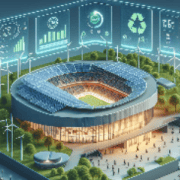
StageEnergy addresses the high energy demand and complex sustainability requirements of event venues. AI-supported forecasts and optimization of heating, cooling and ventilation based on real-time building data, occupancy information and weather data enable targeted, predictive control of energy use.
The system integrates sensors and actuators with existing building technology systems so that consumption can be flexibly adapted to visitor numbers, event phases and the availability of renewable energy sources. This significantly reduces costs and CO₂ emissions without any loss of comfort for guests or operators. The solution is specially designed for the requirements of event venues.
The modular concept of StageEnergy allows it to be transferred to different venues and event types. In the long term, the system supports the fulfillment of climate neutrality and ESG goals and can serve as a regional best practice for sustainable energy management in the event industry.
SmartCrowd - Optimized use of resources at (running) events
DEVELOPMENT
Project objective
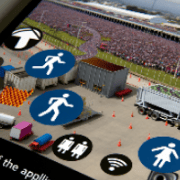
Development of planning software for the optimized use of resources at (running) events. This includes both the strategic placement of infrastructure and the clear management of participants and visitors. The aim is to overcome the challenges of waste and sanitary disposal, accessibility and space and route planning, for example, through visitor tracking, planning and location software.
DEVELOPMENT
AI system and data
Optimization procedures in planning
Data platform
Planning app
Event detection in the situation picture
Crowd tracking system
Value proposition
Targeted use of mostly scarce resources combined with cost reductions (only where necessary, but sufficient)
Increased comfort for visitors/participants (sanitary facilities, waste, etc.)
Professionalization and support of voluntary association work
Increased sustainability by avoiding unnecessary use of resources
OPERATION
Business model
Fees for the use of the planning software (Software-as-a-Service business model)
Rental of necessary hardware, e.g. camera system, analogous to the previous procedure of renting timekeeping technology for sporting events.
OPERATION
Resources and partners
Organizer
Trained staff on site
Technology supplier (both software and hardware)
Event participants
Software/App Developer
Security authorities, offices, licensing authorities
Municipal partners (public transport)
Sponsors
SmartCrowd outlines a solution for the complex challenge of using personnel and material resources efficiently and sustainably at (running) events. AI-supported planning software and crowd tracking are used to strategically place infrastructure such as waste and sanitary stations, take accessibility into account and direct visitor and participant flows in a targeted manner.
The system integrates a wide variety of data sources (sensors, apps, cameras, weather, public transport) and enables optimized space and (running) route planning. This reduces costs, minimizes the use of resources and increases sustainability - while at the same time increasing convenience for participants and professionalizing the often voluntary organization.
SmartCrowd can be distributed as a software-as-a-service model and transferred to various event formats. In the future, the solution will not only support large-scale sustainable events, but also smaller events. The connection of external data sources and continuous AI development open up further potential for efficiency, safety and inclusion.
Topic #3 - (Supply chain) materials management
The procurement and disposal of materials, from stage and grandstand structures to catering, is another key component when considering smart eco-events. Where do the materials come from, taking into account the entire supply chain? Can materials be procured, stored and reused regionally in the sense of a regional circular economy? Can targeted event data management be used to "learn" the material requirements and waste volumes for certain types of event and thus better forecast and optimize them?
Topic lead: Dr. Nadia Burkart (Fraunhofer IOSB)
EcoPur € - AI-supported decision support for sustainable procurement processes

DEVELOPMENT
Project objective
AI-supported decision support for procurement
Economic and ecological criteria
Analysis and evaluation of procurement options using AI
Support in supplier selection through algorithmic suggestions
Visualization of procurement alternatives and their effects
DEVELOPMENT
AI system and data
Product information and price lists
CO₂ footprint
Ecological footprint
Product origin
Transparency along the supply chain
AI-supported suggestions based on user preferences
Option for users to weight criteria
Value proposition
Reduction in time expenditure
Security and transparency
Systematic approach
Measurability of success
Image
Gaining confidence
Achievement of sustainability goals
Standardized evaluation framework for all products
Consistency in procurement across locations
Contribution to meeting statutory and voluntary sustainability standards
OPERATION
Business model
Platform-independent access via browser
No local installation required
Simple integration into existing IT infrastructure
Web application
SaaS
Open Source
Different license models
OPERATION
Resources and partners
Customers (companies with a sustainable procurement strategy)
Software manufacturers (providers of ERP, SCM or purchasing systems)
Infrastructure provider (provider for data integration and hosting)
Product suppliers (manufacturers of sustainable products and materials)
EcoPur € is a conceptual app solution that aims to systematically support sustainable procurement decisions in companies. Based on artificial intelligence methods, a wide range of data sources - including product information, price data, CO₂ and ecological footprints as well as origin information - are integrated, analysed and processed in a standardized evaluation framework.
The application aims to combine economic and ecological criteria in a standardized, transparent decision-making process. Users can individually adjust the weighting of the individual criteria, which enables them to prioritize according to their needs (e.g. price, emission values, supply chain transparency). The results are provided in the form of algorithmically generated recommendations for action and interactive visualizations to clearly illustrate the effects of alternative procurement options.
The designed solution approach comprises a platform-independent SaaS architecture with open source components that enables integration into existing ERP, SCM and purchasing systems. This ensures a high level of scalability, reduces implementation barriers and supports companies in achieving statutory and voluntary sustainability targets.
EcoPur€ creates a data-driven, reproducible and objectifiable selection process that can significantly increase both the efficiency and sustainability of procurement decisions.
Topic #4 - Smart event platform
The planning, implementation and follow-up of events involves many recurring activities that are supported by the use of IT systems. Monitoring and optimizing sustainability aspects requires the collection of extensive data sets on mobility, location and material management from past events, classified by event type and useful for both participants and organizers. What should a smart event platform look like so that AI processes can be developed on this basis that can provide crucial support for both the customer journey and event planning?
Topic lead: Dr. Thomas Usländer (Fraunhofer IOSB)
29/07/2025
EventOrga
DEVELOPMENT
Project objective
Planning and organization tool for events with a focus on sustainability (NH)
Different phases, target groups and needs
Characteristics depending on the type of event
Learning from practical examples with NH measures
DEVELOPMENT
AI system and data
AI system = RAG for NH event planning
Connection of various LLMs
Interface to existing event planning tools
Interface to context and accompanying data
Data from past events and NH measures
Value proposition
Individualized event planning with NH focus
co-pilot function
current info
Reporting
Funding recommendations
Certification (e.g. GreenEvent BW)
Comparison with"best practices" events
Lessons learned
Collaborative planning
Can be integrated with existing event planning software
GDPR-compliant data management
OPERATION
Business model
Cost categories
- Development
Further development
Operation / Hosting
Administration
Licenses
Revenue
Chargeable license model
Sponsoring
Combination with event services (incl. advertising?)
OPERATION
Resources and partners
Partner
Platform operator
Developer
NH certifier
Operator of the venue
HPC operator
Scheduling:
Step-by-step, agile development
Prototype after 6 months
MVP after 1-2 years (depending on functionality)
The "EventOrga" app was developed to provide food for thought for an event planning tool that covers different phases of event implementation, target groups and needs (e.g. depending on the type of event) with a focus on sustainability aspects. Different roles and perspectives (e.g. organizers, service providers, active participants, visitors, stakeholders) should be covered and taken into account.
The challenges lie in the necessary development of a
catalog of data on the location, e.g. on services, equipment (what is available where and in what quality, quantity and when?) and mobility offers. It was emphasized that the data should remain with the data provider and should only be made available to other organizers according to defined rules in the sense of a uniform event data space.
Based on this, AI processes should be used for event and resource planning, in particular to be able to evaluate different variants with regard to sustainability aspects.
It would also be desirable to be able to use the event planning data for event planning and for the creation of an ESG report after the event has taken place.
29/07/2025
Best-fit event

DEVELOPMENT
Project objective
Best-fit event app development:
Support with the customer journey (even before the event)
Assess the cost/benefit ratio for participation
Consider sustainability aspects (e.g. mobility, energy supply) (optional)
Ensure accessibility with regard to language, culture, impairments
Support user matching
Gamification application for user experience (optional)
DEVELOPMENT
AI system and data
HPC environment (GPU cluster)
Semantic model (embedding model)
data management:
Persons, utilization of location (including camera-based)
Interactions between participants
exhibitors
Interests/offers, advertising
Value proposition
For participants:
Suggestions for suitable events
Matching with other participants/interested parties
Optimize routes and navigation
Map customer journey (before, during, after)
Enable spontaneous meet-ups (dynamic)
Generate more and easier leads
Download information on TN
For organizers/service providers:
Tracking of interests; matches that have taken place
Open up additional upselling opportunities
Basis for further development of the event
1 Event app elementary
Contact "Refinement"
Basis for nudging towards sustainability
OPERATION
Business model
Platform economy approach
Pay per successful use (i.e. per lead)
Organizer offers app usage and financing
Combination
OPERATION
Resources and partners
Organizer
IT system operator
LinkedIn
Development partner
System integrator
Ticket/registration partner
The "best-fit event" project idea is intended to support the customer, i.e. the potential and registered event participants, throughout their entire customer journey.
This begins even before the event with the question of which events are available and proposed on a defined topic that matches the customer's interests. Great importance is attached to the cost/benefit ratio of event participation, also taking into account the sustainability aspects of resource use (time, costs, energy, mobility, CO2, etc.). Inclusion criteria relating to language, culture and disabilities should also be taken into account.
During the event, "Best-fit Event" should dynamically make suggestions to participants for spontaneous meetings, depending on space and time-related offers, in order to generate more and easier leads and thus also increase the benefit of on-site participation. This also gives organizers the opportunity to develop upselling offers, e.g. to "refine" contacts and event offers.
A project consortium for the realization of "Best-fit Event" requires IT system developers and integrators as well as ticket and registration partners in addition to the organizers as application partners. A direct interface to social media platforms would be conceivable.
Become part of our network!
The community management of the KI-Allianz Baden-Württemberg specifically connects business, science and politics in the regions in order to promote the exchange of knowledge and the application of AI technologies. The Community Management of the AI Alliance is also represented in the Karlsruhe region.
If you are interested in a result or an entire topic and would like to find out more or get involved, please contact our Community Management for the Karlsruhe region at
:
Akiza Hagami
akiza.hagami.neb@ki-allianz.de
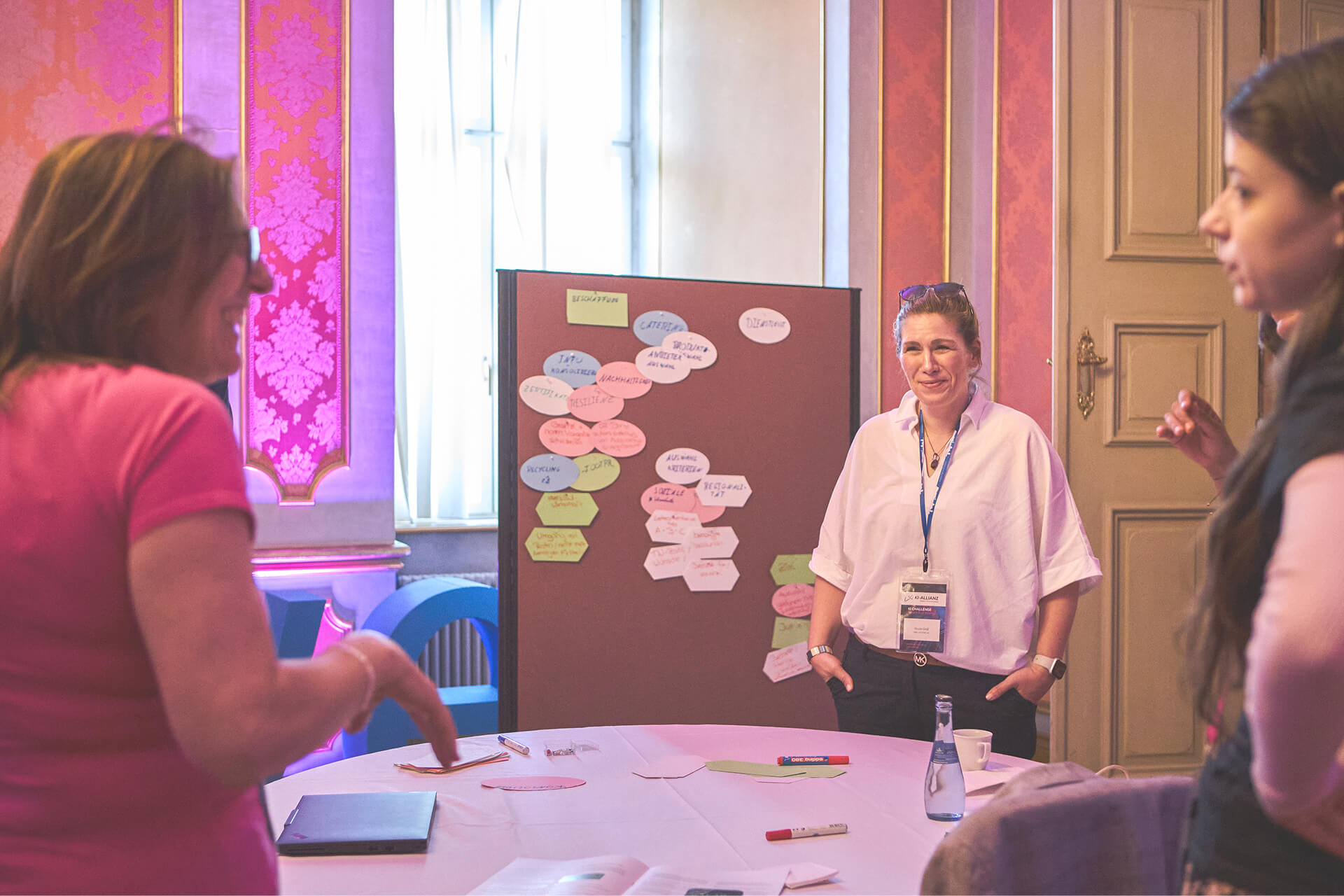
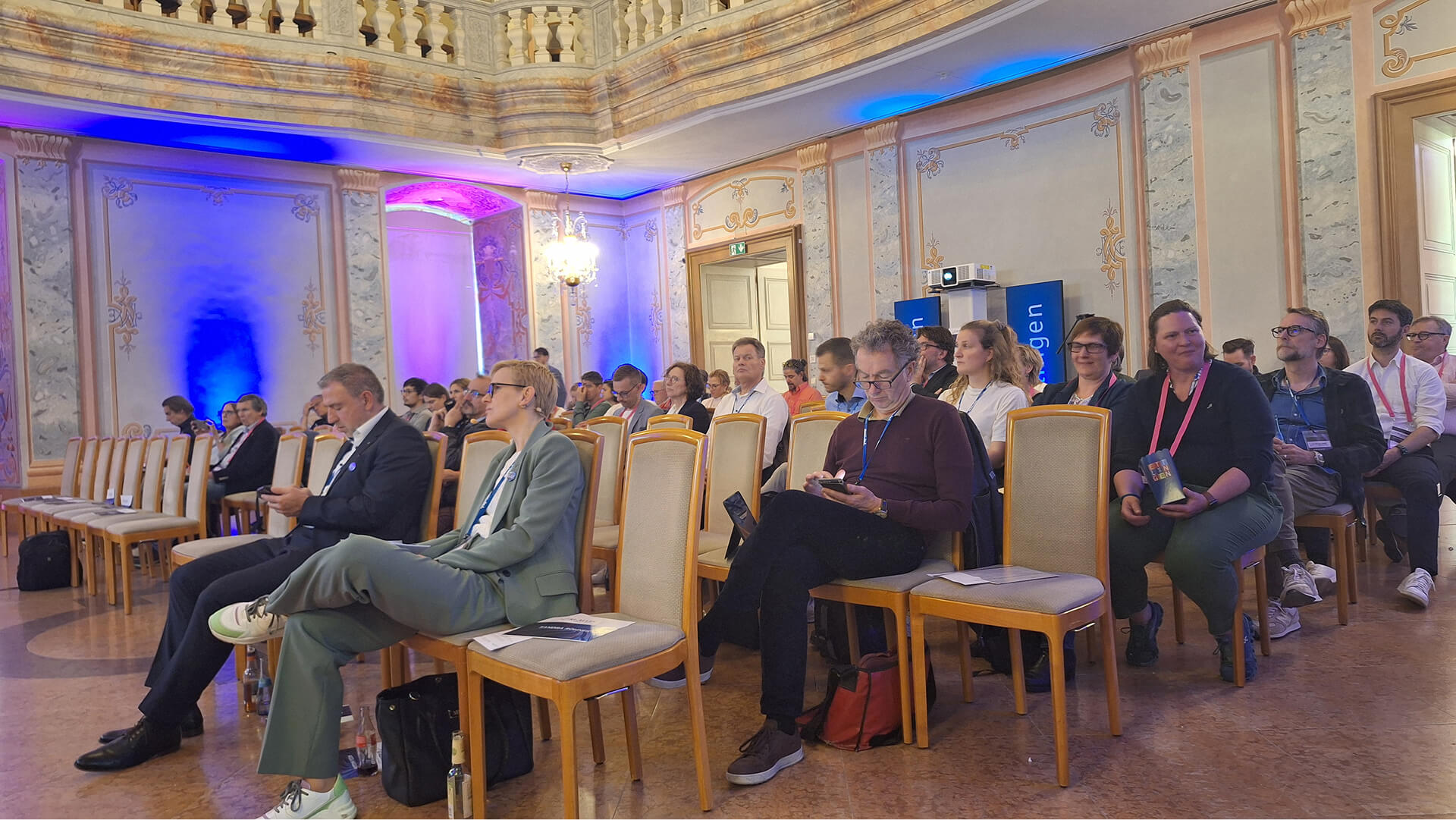
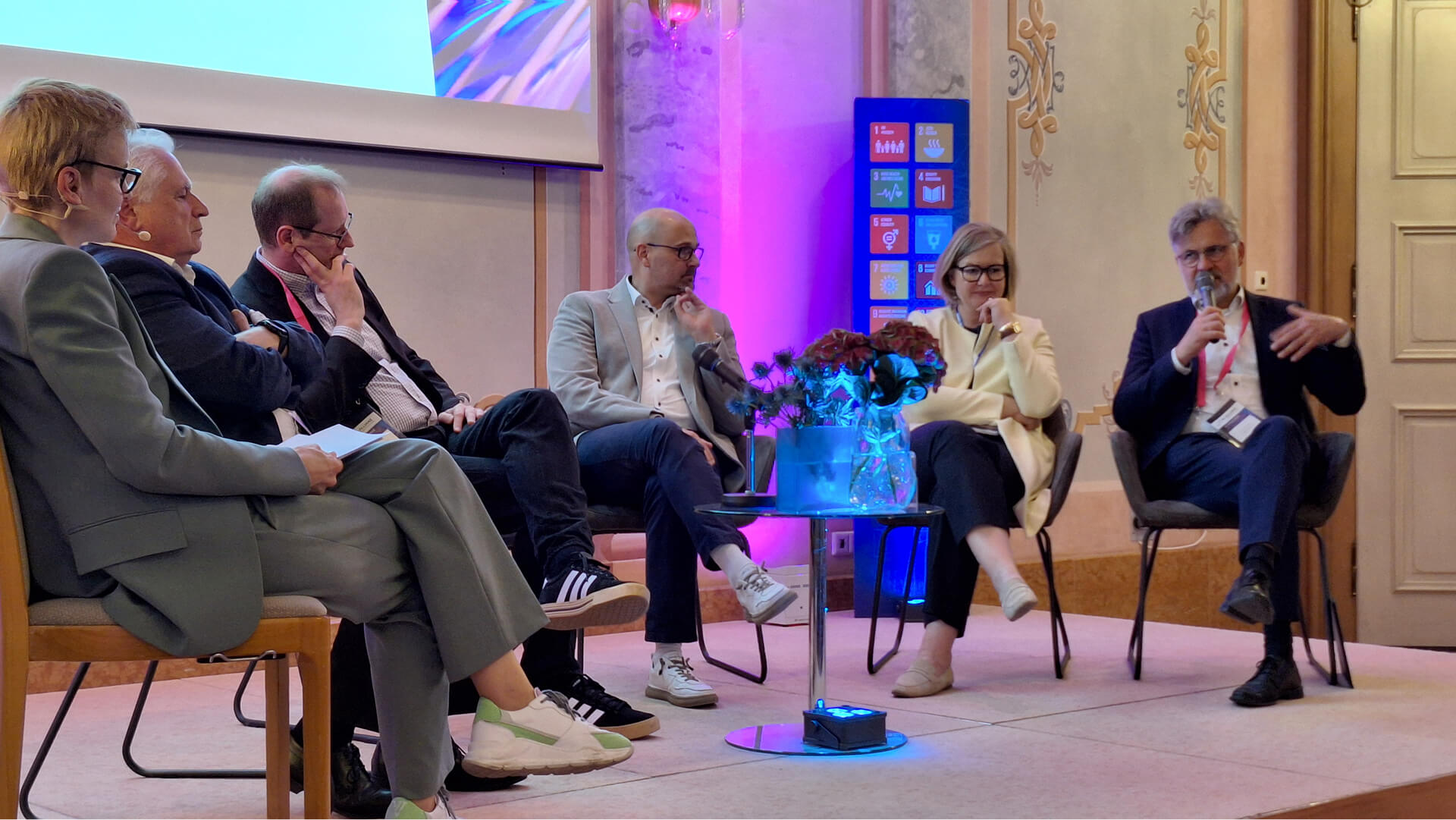
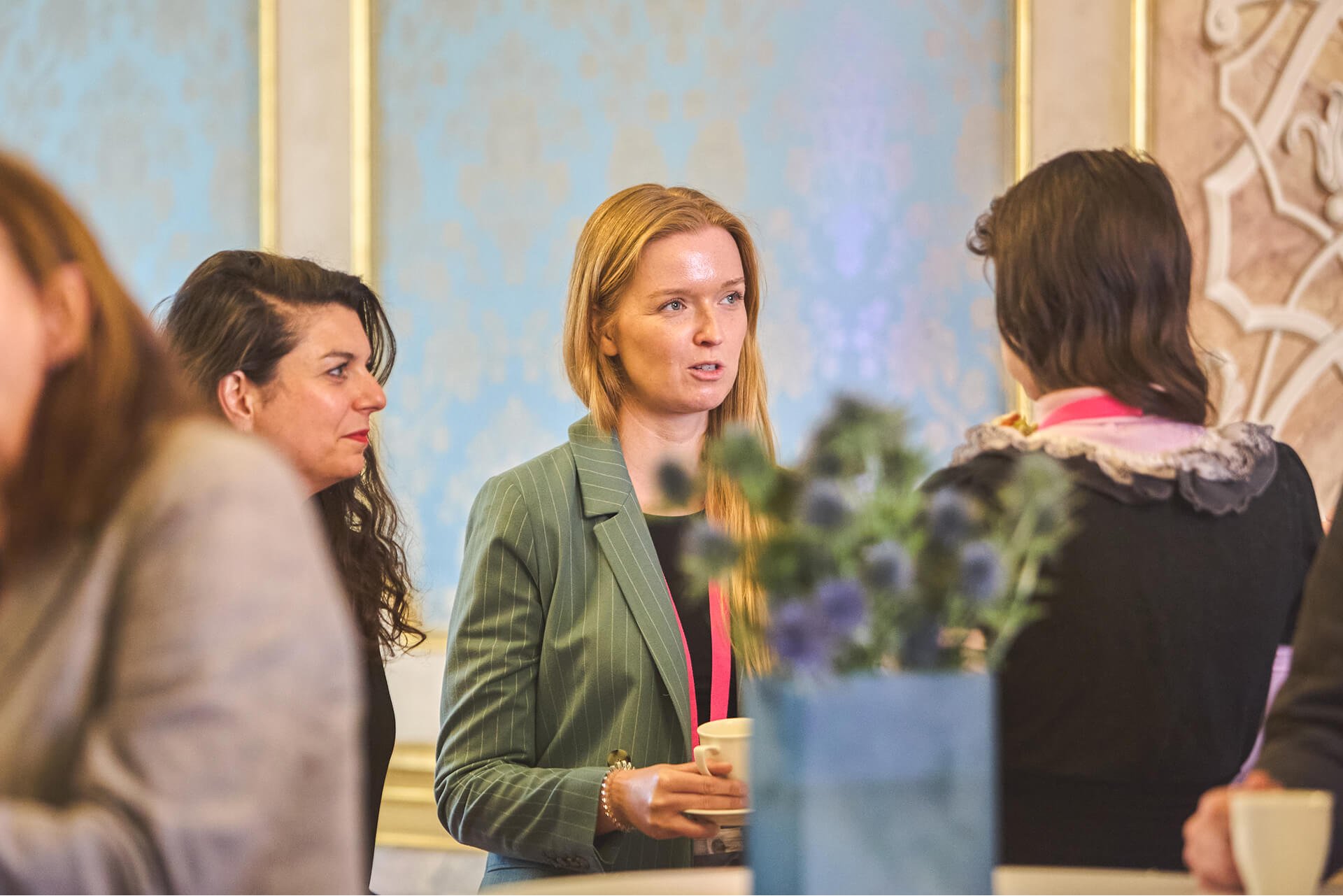
Impressions and voices from "Smart Eco-Events"



We are all dependent on each other.
Johannes Arnold Lord Mayor of the City of Ettlingen
The great thing about AI (artificial intelligence) is that I can bring many aspects together.
Dr. Frank Mentrup, Lord Mayor of the City of Karlsruhe
How can AI help us ask the right questions?
Markus Wiersch, Deputy Managing Director of Karlsruhe Marketing Event GmbH
What is special about this workshop format is that the providers do not develop solutions that can subsequently be offered to users, but that users themselves are directly involved in the design.
Thomas Usländer, project manager of the AI Challenge
Our plan worked. The participants were inspired by the kick-off event and there was a lack of time, not a lack of ideas.
Akiza Hagami, Community Manager of the Baden-Württemberg AI Alliance