

Many organizations want to use artificial intelligence—but repeatedly encounter the same obstacle: data is difficult to access, not interoperable, or legally uncertain. With the release of central open-source modules for the AI data platform, we at the AI Alliance Baden-Württemberg are addressing precisely this issue and creating an open, connectable foundation for trustworthy AI applications.
Why data infrastructures are crucial for AI
Artificial intelligence has long been part of everyday life in business, administration, and research. Algorithms, models, and tools are available—often even freely accessible. But the real bottleneck lies elsewhere: in high-quality, reliable, and legally compliant data.
Small and medium-sized enterprises (SMEs), local authorities, associations, and research institutions in particular face the challenge of using AI effectively without being able to set up their own data rooms, complex IT infrastructures, or specialized teams. As a result, many AI ideas remain stuck in the pilot stage or fail before they are even implemented.
This is precisely where our AI data platform comes in. It creates an infrastructure that facilitates access to data, makes standards usable, and enables practical AI projects.

Open modules for quality and excellence
With this latest release, the AI Alliance is making key open-source components of the AI data platform publicly available for the first time. This represents a conscious step toward transparency and cooperation.
The goal is to establish a robust foundation for:
- data-driven value creation,
- interoperable AI applications
- and cross-sector cooperation
to create – open, quality-assured, and compatible with Europe.
Data as a bottleneck—and as leverage
Many organizations are aware of the potential of AI. In practice, however, they often lack access to suitable data, tools, or models. This is where the AI data platform comes in: it connects open, interoperable data spaces across various sectors—from industry and mobility to smart cities and administration.
A key reference point here is Manufacturing-X – a European initiative for the secure and sovereign exchange of industrial data along the value chain. This connectivity ensures that solutions from Baden-Württemberg do not remain isolated, but are embedded in European ecosystems.
The key point is that the platform not only considers technology, but also governance, compliance, and user perspectives right from the start.
Many organizations know that AI has enormous potential, but they lack access to suitable data, tools, and models. With the AI data platform, we are creating an open, interoperable infrastructure that connects data spaces from different sectors and is compatible with European standards such as Manufacturing-X. In this way, we are laying the foundation for data-driven value creation in business, science, and administration.
Dr. Thomas Usländer, Project Manager and Business Manager AI Engineering at Fraunhofer IOSB
These open source modules make all the difference
The published modules form the backbone of the AI data platform. They address key requirements of modern AI ecosystems—with a clear focus on usability and quality.
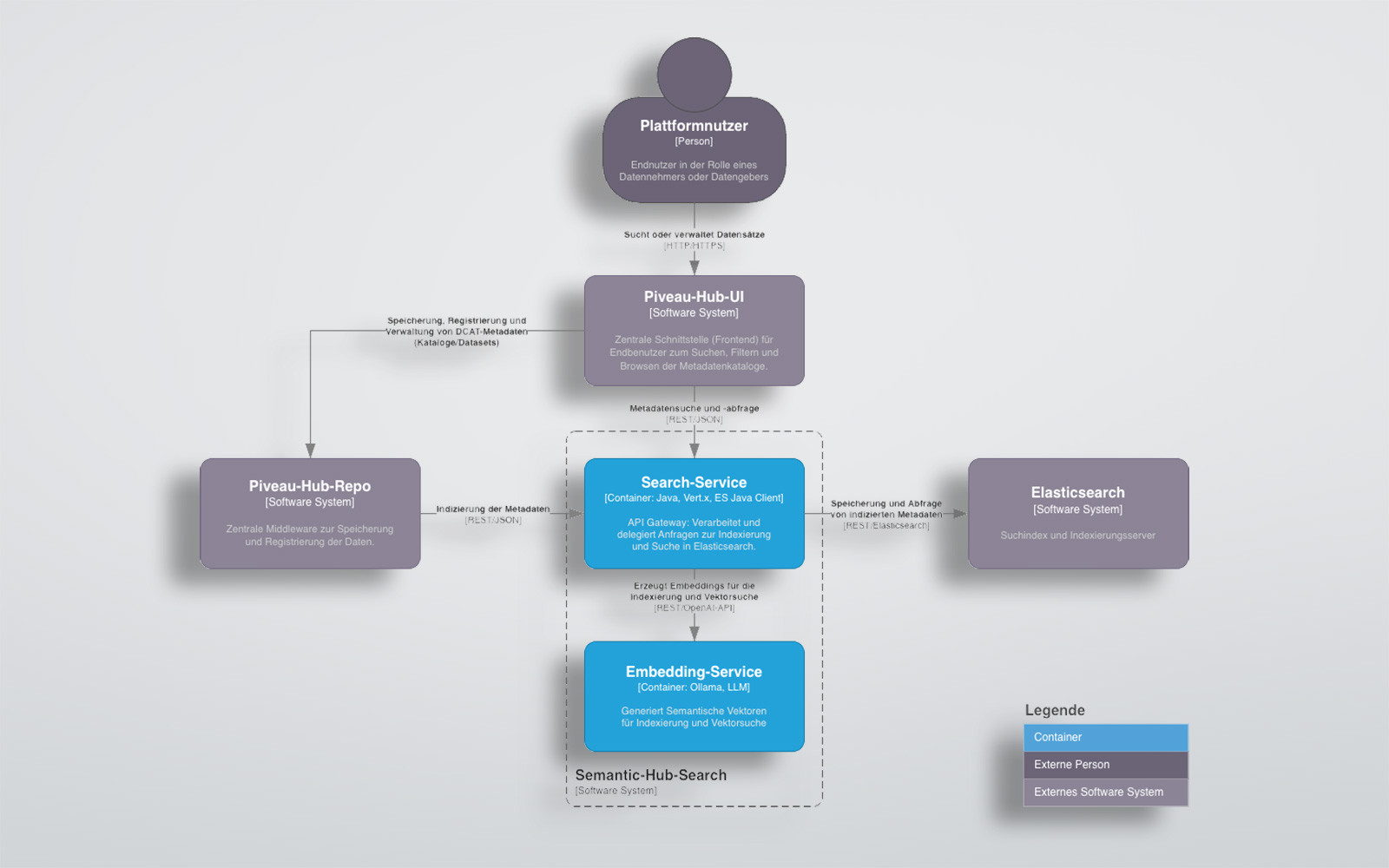
- Intuitive data portal: A user-friendly data portal facilitates the search, management, and use of data and AI models. The low-threshold access is aimed in particular at SMEs and organizations without in-depth technical knowledge.
- AI-powered Smart Data Search: Smart Data Search uses AI to quickly find relevant data sets—even when users don't yet have a clear idea of what they're looking for. This lowers barriers to entry and speeds up data-driven projects.
- Automated Data Quality Services: Quality is a key prerequisite for trustworthy AI. Data Quality Services automatically check data for structure, data protection, and content quality, significantly reducing the effort required for manual data preparation.
- Interoperability and data integration: Data integration tools ensure that data from different domains can be linked and shared. This makes the platform "data room-ready" and supports cross-sector use cases.
- Practical developer tools: Open developer tools—including interfaces, wizards, and Python libraries—enable direct use of the platform in development projects, companies, and universities.
Jointly developed in the Baden-Württemberg AI ecosystem
The AI data platform is deliberately not being developed behind closed doors. Companies, research institutions, and local authorities are invited to get involved as early adopters in the user forum, test their own use cases, and actively help shape standards.
This open approach strengthens knowledge transfer—and accelerates the path from research and development to practical application.
"Only by connecting data, knowledge, and people can we create a sustainable AI ecosystem for Baden-Württemberg," says Sandra Rohner, Managing Director of the AI Alliance Baden-Württemberg.

Building block for a responsible AI ecosystem
With the release of the open-source modules, we are adding a central infrastructure layer to the existing AI ecosystem. The platform combines technical performance with transparency, quality assurance, and European connectivity, thereby creating a solid foundation for responsible AI applications.
Would you like to get started right away and find out more?
Discover the open source modules on GitHub:
Further information on the AI data platform: