AI in the Ostalb District: Four Ideas for Resource-Efficient Production
Tobias Kenner
Published on:
Constantly changing material availability. Orders making their way through the factory on paper. Knowledge that exists only in the minds of individual employees: Manufacturing companies in the Ostalbkreis region are all too familiar with these inefficiencies in their day-to-day operations—and that’s exactly where our AI challenge, “Resource-Efficient Production,” came in. Together with an advisory board comprising the Ostalbkreis District Office, Aalen University of Applied Sciences, Fraunhofer IOSB, the Ostwürttemberg Chamber of Industry and Commerce, and digiZ Ostwürttemberg, we brought companies and experts together to translate real-world operational challenges into concrete project ideas.
One participant summed up exactly what set this workshop apart from other formats:
Not just pulses or front-facing sound, but a great working mode. I'd love to do it again!
Four specific project ideas emerged from four thematic strands.
Finally Put Production Data to Use
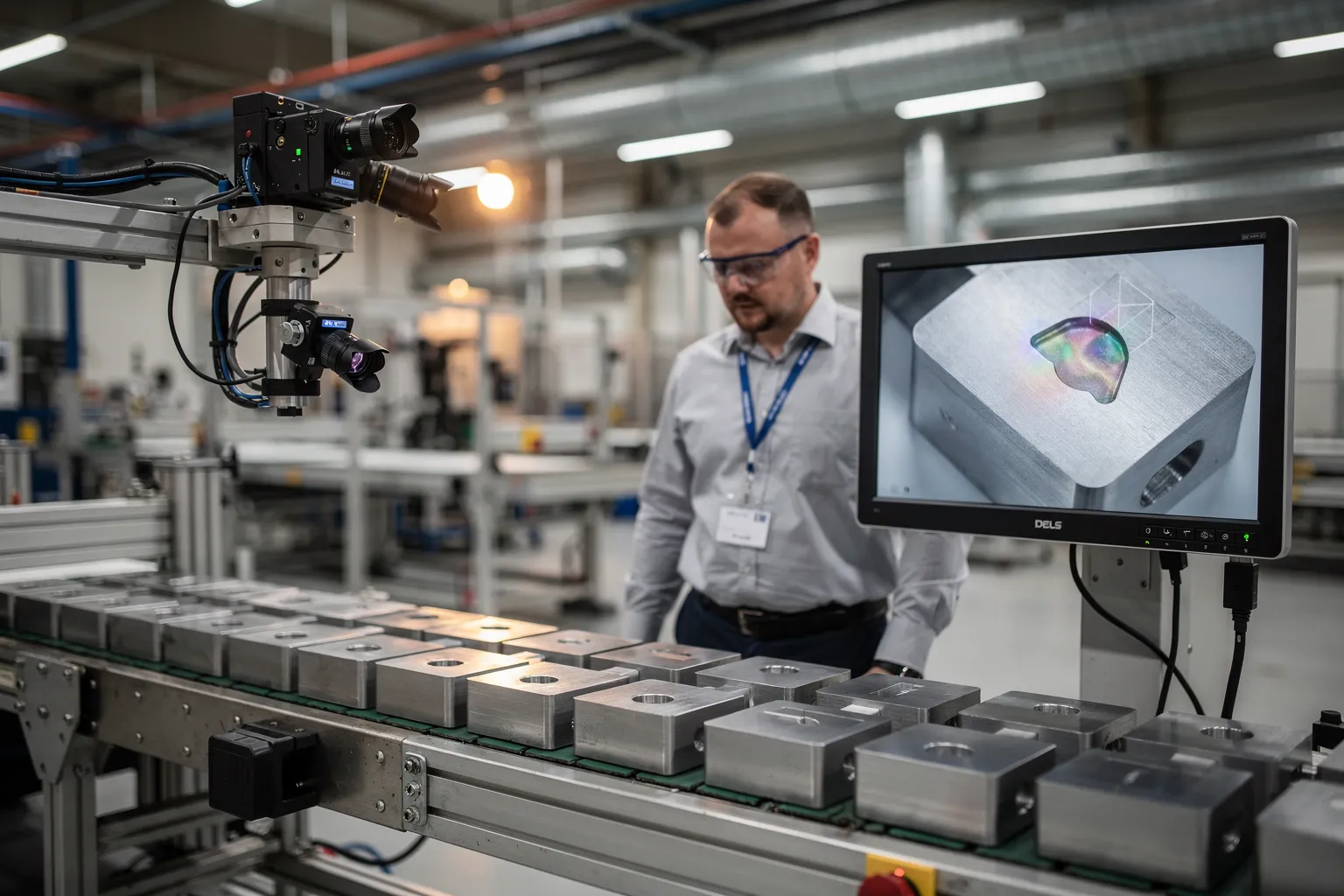
With up to 10,000 parts produced per hour and over 1,000 characteristics recorded per product, many companies are overwhelmed by data that could actually identify defects early on—if it were analyzed. The “AnormAI” project takes two approaches to address this: First, a real-time anomaly detection system identifies when the production chain deviates from normal conditions. Second, a trained model—using Model Predictive Control—is designed to predict system behavior and adjust control parameters so that defects are prevented before they even occur. Prevention rather than mere detection.
AnormAI Project Concept: Anomaly Detection and Predictive Control.
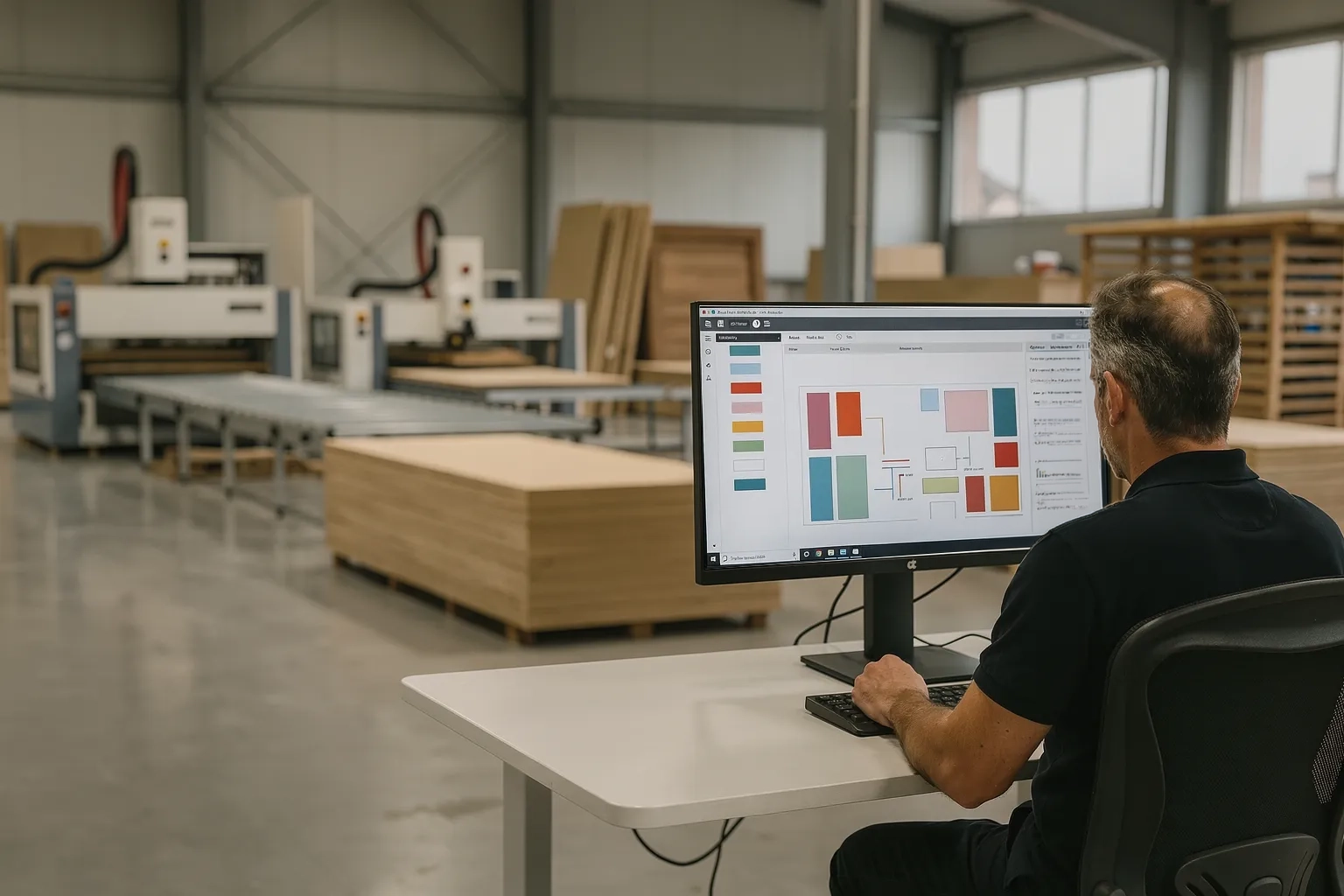
Another area of potential lies in the furniture industry, where kitchens are almost always custom-made: How many orders can realistically be produced using which machines, and by when? The “SmoothKitchen” project uses pattern recognition and cluster analysis to derive correlations between order characteristics and actual production processes based on historical order and machine data. The result will be a dashboard for the sales department that predicts capacity in real time and reliably calculates new delivery dates even in the event of machine or staff absences.
The SmoothKitchen project uses pattern recognition and cluster analysis to predict, among other things, capacity bottlenecks.
To ensure that production materials arrive at the machine on time
An order passes through several resource levels in a production process—but only the first step is digitally recorded in the ERP system. All subsequent supply steps are often still handled using paper work orders and verbal coordination, without logistics or production knowing in real time where materials are available or which order takes priority. This results in long travel distances and unnecessary downtime, during which machines have to wait for replenishment that no one reports in a timely manner. The “LOG-AI” project addresses precisely this aspect of warehouse logistics: Using tags, the system locates load carriers directly in front of the machines and automatically generates a dynamic, prioritized order list—digital control instead of verbal instructions and paper cards.
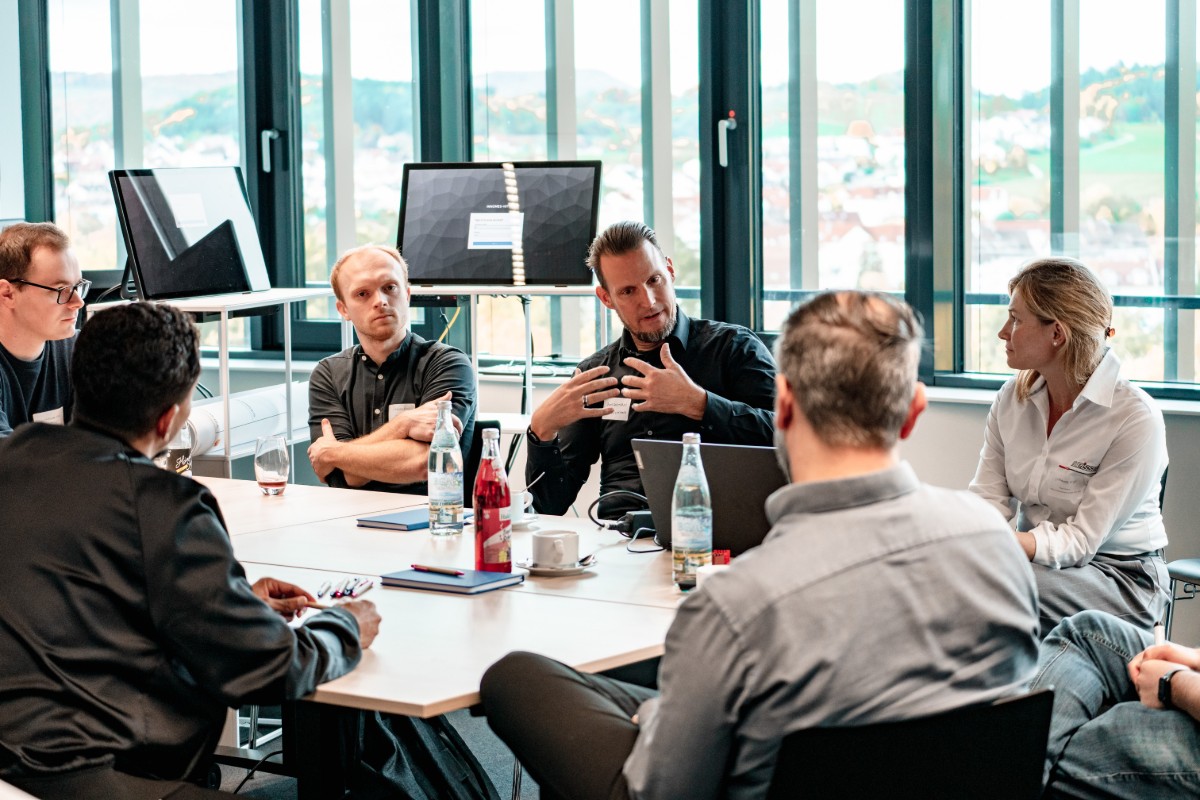
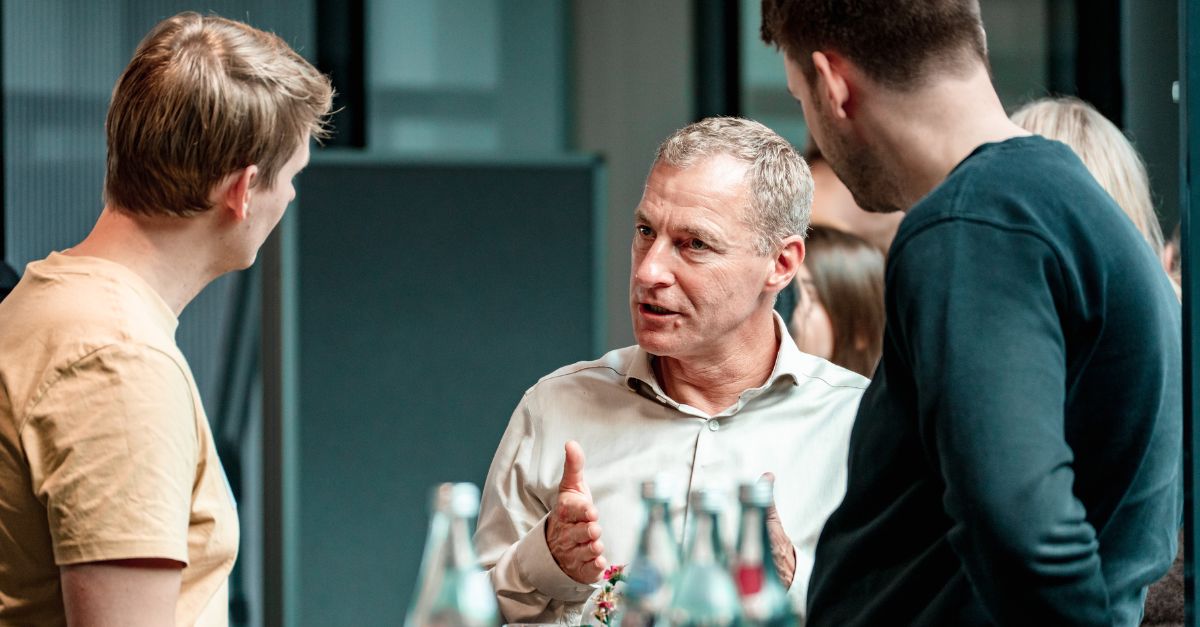
Three participants in the AI Challenge in the Ostalbkreis district discuss project outlines, feasibility, and technology selection.
How Employees' Experiential Knowledge Remains Within the Company
When a production line comes to a standstill, every minute counts—and rapid fault diagnosis often depends on individual experienced employees whose knowledge is rarely documented in a structured way. This is exactly where the “Fabriq” project comes in: an AI-powered platform that analyzes unstructured shift logs and production data, automatically identifies the causes of faults, and provides specific recommendations for action—ensuring that knowledge doesn’t leave the company along with individual employees.
An AI-powered platform that analyzes unstructured shift logs and production data, automatically identifies the causes of errors, and provides specific recommendations for action.
What Matters in the End
Four thematic strands, four project ideas with different focuses: In no case does AI replace the experience of employees; rather, it makes that experience visible, more readily accessible, and less dependent on individual employees. Only the third theme—the circular economy in battery production—remained without a concrete project idea: Digital product passports, AI-supported R strategies, and AI-supported battery disassembly were discussed but have not yet been developed into a project proposal—a topic that is likely to grow in importance in the Ostalbkreis district.
Whether from AnormAI, SmoothKitchen, LOG-AI and Fabriq Whether these will become concrete projects is now being decided by companies in the region.
Circular economy, skilled trades, construction processes, modular construction: How the Karlsruhe-Bau AI Challenge demonstrates how AI specifically helps the construction industry.