

The state-wide project “AI Can Do It: Securing Skilled Workers for Baden-Württemberg” has been underway since early 2026. As project coordinator and creative strategist, Ina Biesenbach is helping oversee the film production. Following the first few days of filming, she discusses the project’s approach, the selection of companies, and her initial impressions from the field.
Ina, what is “AI Can Do It” all about—and who is the project intended for?
“AI Can Do It” is a video series that uses real-world examples to show how small and medium-sized businesses in Baden-Württemberg are already using AI today to ease the workload on skilled employees—for example, by preserving internal knowledge or making work processes more efficient. The project is primarily aimed at companies that are asking themselves: What has been proven to provide real relief, and which solutions might be a good fit for us? Our goal is to provide guidance, dispel fears, and present AI in a more nuanced light—not as a threat to the job market, but as genuine support for companies and employees.

What do you want the audience to take away from it in the end—and what effect are you hoping to achieve?
It’s important to us to show that you don’t have to restructure the entire company right away. Often, even small, low-threshold solutions are enough to ease the burden on employees or provide meaningful support for processes. We want viewers to take away the message that AI is tangible, achievable, and can be tailored to their individual needs.
What we hope to achieve with this project is greater clarity and a greater willingness to implement AI. Many companies know in principle that AI has potential, but they lack concrete examples from their own experience. When businesses see that other companies in Baden-Württemberg are already successfully using AI to address the shortage of skilled workers, it builds trust. Ideally, this will facilitate a transfer of practical knowledge from the field to the field.
Why is this project needed right now?
Baden-Württemberg faces a twofold challenge: Demographic change is exacerbating the shortage of skilled workers, while at the same time pressure is mounting on companies to work more productively and innovatively. Many businesses are now seeing firsthand that positions remain unfilled, knowledge is being lost as employees leave, and teams are reaching their breaking point. AI is not the answer to everything, but it can be an important tool: It takes over routine tasks, supports training and development, improves knowledge management, and frees up time for the actual specialized work. We want to highlight precisely these realistic applications—especially to show that AI and human work are not mutually exclusive, but rather, at their best, complement each other effectively.
What are you looking for in companies—and what makes a good case for you?
“We’re looking for AI applications that have proven themselves in everyday work and have had a tangible impact on the workforce—whether through more efficient workflows, better working conditions, or reduced workload—often a combination of these factors. We usually find these case studies through our network, but we’re also happy when companies reach out to us proactively. It’s always particularly interesting when the focus isn’t just on the technology, but also on the story behind it: What was the challenge, and how exactly did AI help?”
You've already finished filming the first episode. Which company is kicking off the video series, and what was the experience like on set?
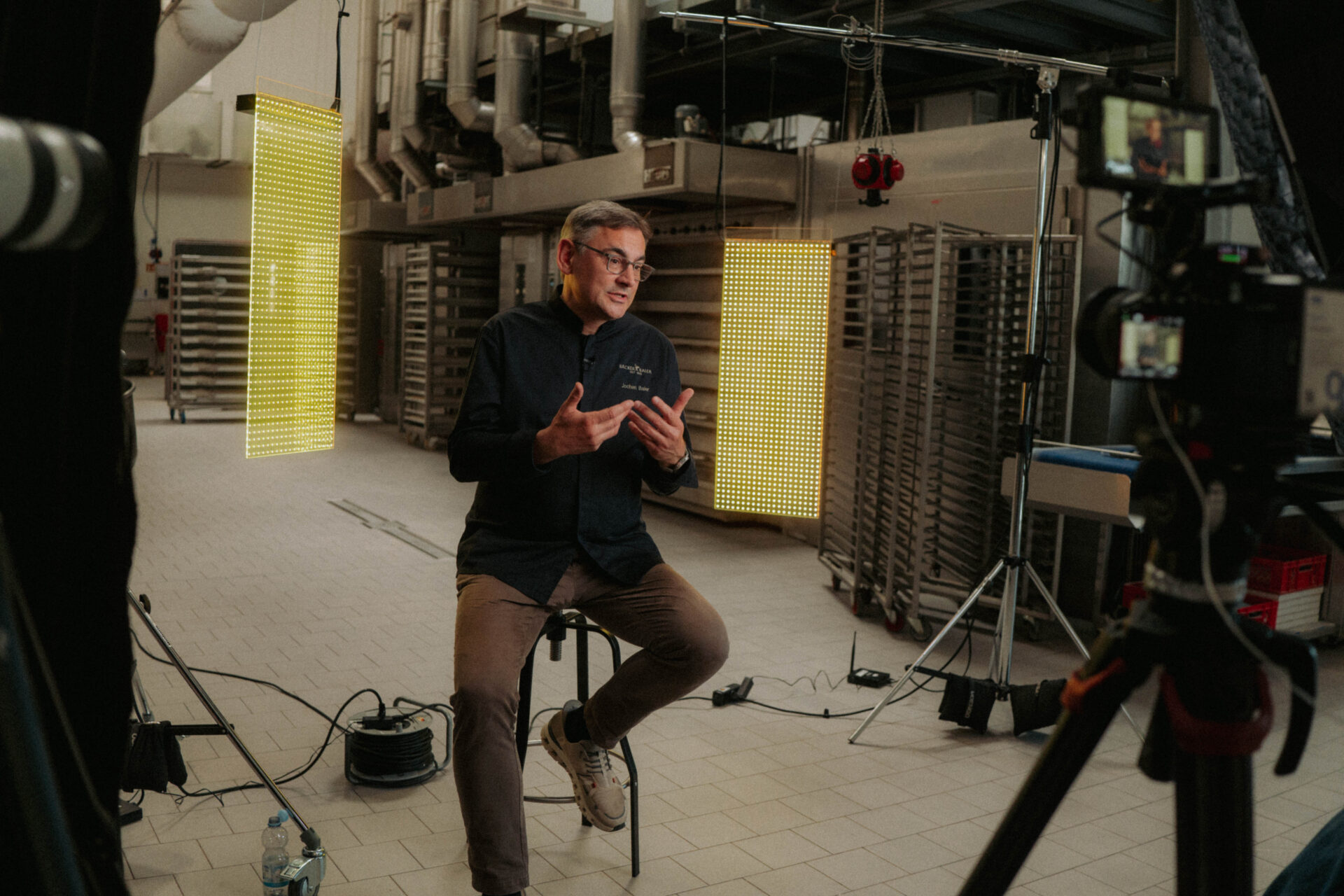
Our first shoot took place at Bäcker Baier in Herrenberg—a traditional artisan bakery that you wouldn’t immediately associate with AI. That’s exactly why this case was so exciting for us. Managing Director Jochen Baier uses AI for sales forecasting: Based on factors such as weather, holidays, and regional events, the system calculates how many baked goods will actually be needed in the coming days. This not only ensures more precise planning but also has a tangible impact on working conditions at the bakery: Thanks to improved predictability, night shifts have been significantly reduced and more flexible work schedules have been implemented—a measurable benefit for the employees. It was particularly impressive to see the conviction with which Mr. Baier approaches this topic. He is the sixth-generation leader of this family-run business and demonstrates that AI and traditional craftsmanship are not mutually exclusive. On the contrary: the technology frees up time so that more focus can once again be placed on the craft itself.
What are the next steps in the project?
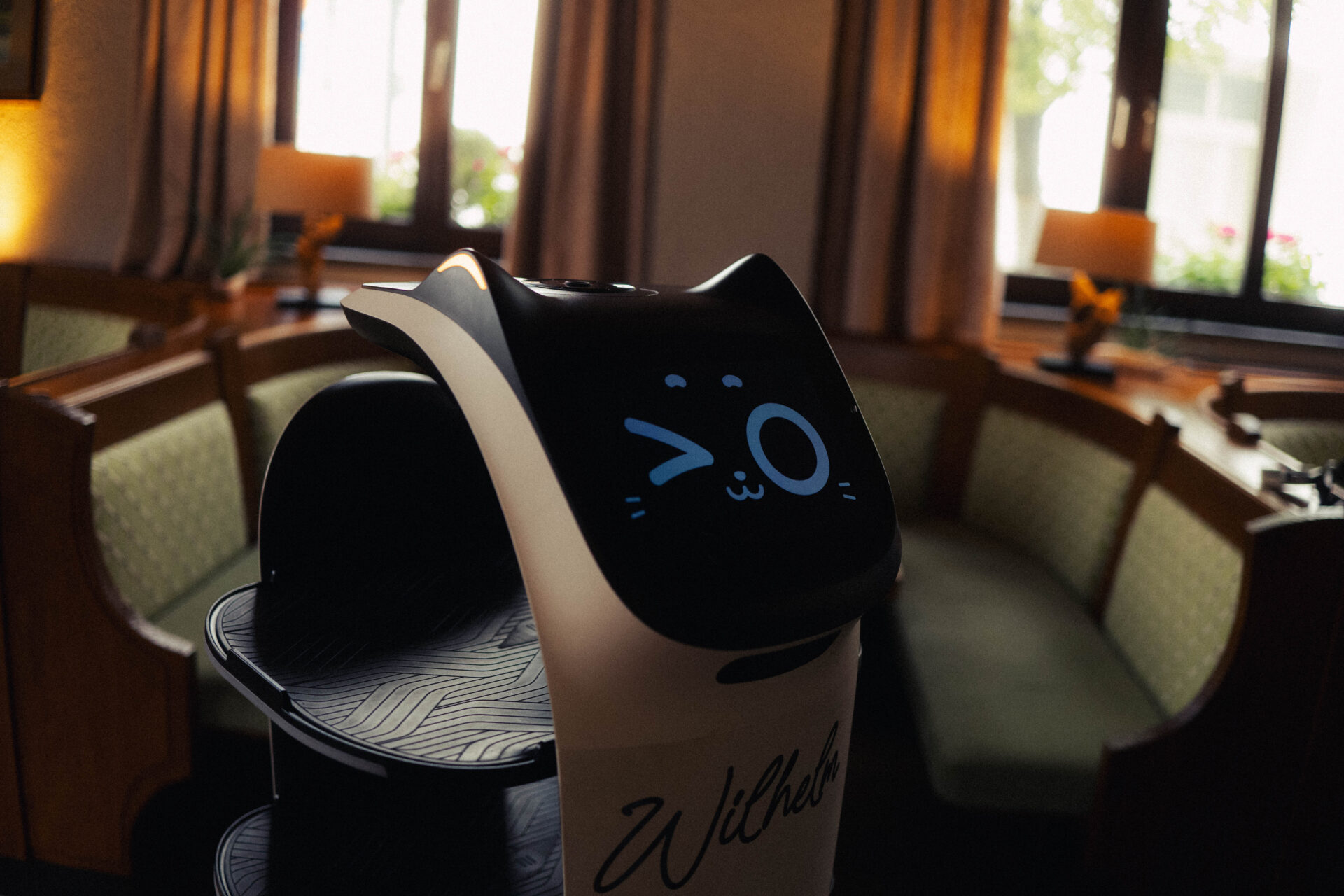
The focus is on continuing our research and selecting additional companies from Baden-Württemberg—while simultaneously organizing the next filming sessions and developing the content for the case studies. Our goal is to showcase as diverse a range of industries and fields of application as possible: from skilled trades to industrial companies and public administration, all the way to the social sector. The next episode will show how AI can provide support in the restaurant industry.
What have you taken away from the project so far—and what do you see as the biggest challenge?
What I appreciate most is the direct interaction with local companies and people. You quickly realize just how much innovative potential there is in Baden-Württemberg—especially in companies that don’t talk much about their solutions. This series provides a platform for these experiences.
The biggest challenge is striking a balance between technological depth and clear communication. AI is a complex topic, but that’s exactly why it’s important to discuss it honestly, in a way that’s easy to understand, and with a focus on real-world applications—without oversimplifying or exaggerating.