

Many small and medium-sized businesses recognize that artificial intelligence can enhance their competitiveness. At the same time, it often remains unclear how to take the first concrete steps—and how to turn initial tests into a sustainable, actionable AI strategy. A gap exists between sporadic experimentation and strategic integration. This is exactly where INNOPORT in Reutlingen comes in: As the innovation center of the city of Reutlingen and a cooperative partner of the AI Alliance Baden-Württemberg, it supports companies, startups, and professionals in the practical and responsible use of AI—from initial understanding to concrete implementation in their own processes.
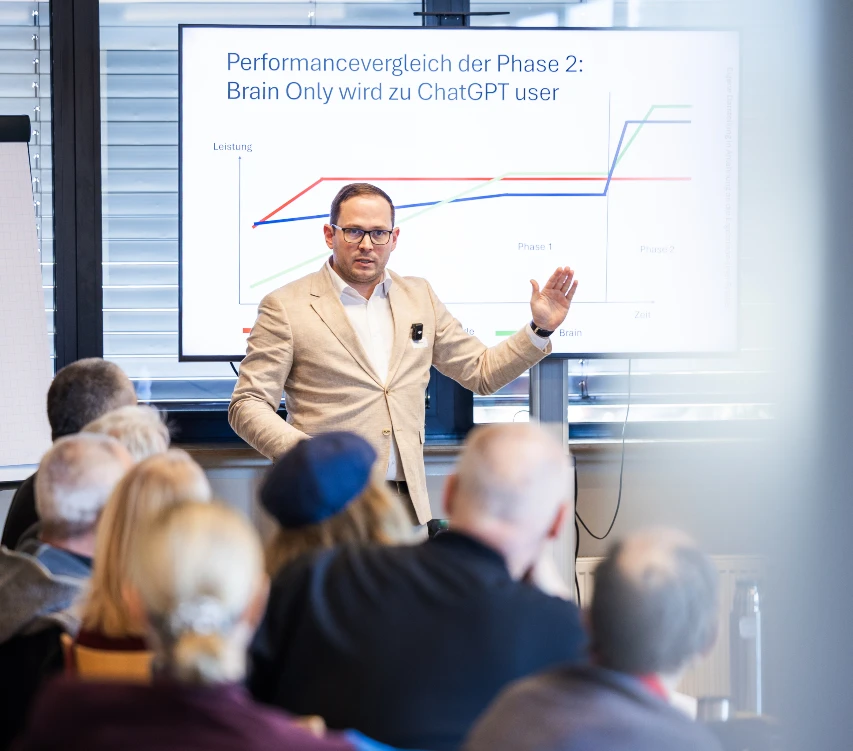
The key question today is no longer whether AI should be used, but where it can be effectively applied within a company’s specific operational context. It is precisely this shift in perspective that shapes the offerings at INNOPORT. “A general overview of AI is no longer enough—companies need to understand where it can be effectively applied within their own operational context,” says Holger Langhans, Director of INNOPORT. The focus is therefore on real-world operational challenges: recurring administrative tasks, documentation requirements, internal communication, or data-driven analyses. The goal is to identify concrete starting points—not to discuss general technology trends.
Right now, this structured approach is crucial. Many companies swing between two extremes: they test individual tools without clear objectives—or they hesitate too long and miss out on opportunities for growth. Both approaches tie up resources without producing any lasting results.
Providing guidance: A systematic approach to getting started
The introductory programs at INNOPORT therefore deliberately focus on guidance rather than on a wide variety of tools. Participants bring their own tasks, questions, and processes to the table. Together, they work out:
- What potential does AI realistically offer today?
- Where does measurable added value come from?
- What skills does a team need?
Formats such as prompting workshops or the “AI Driver’s License” teach the basics in a practical way. In the AI-based“AI Experience Room,” teams also get to experience in a hands-on way how AI works and the mindset behind its effective use.
Many participants have expressed similar views: AI is less complex than assumed—yet it requires a strategically well-thought-out approach.
From Understanding to Implementation: Integrating AI into Your Business
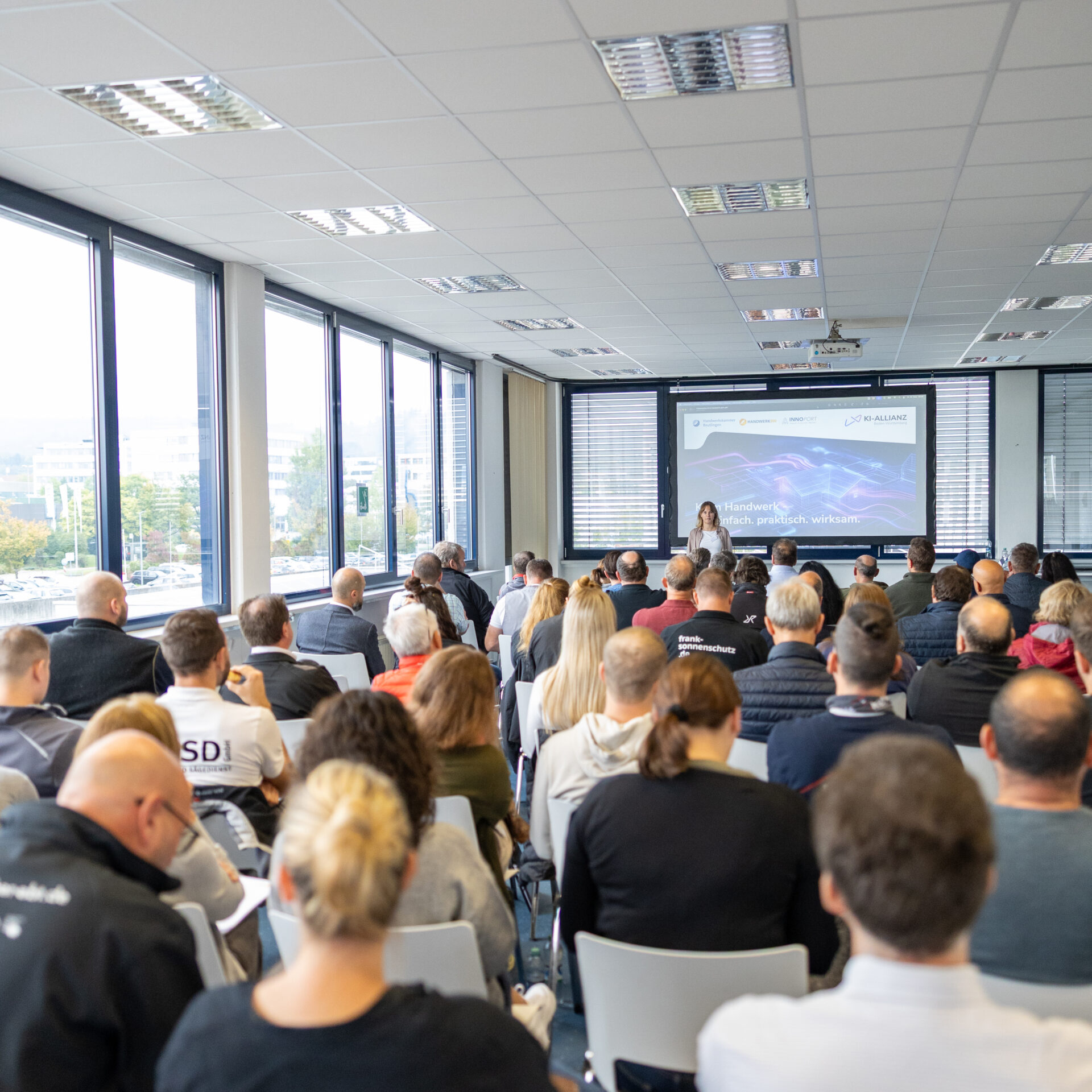
Many companies successfully navigate the initial phase of implementing AI in SMEs—but when it comes to practical application, some hit a snag. Or halt the process entirely. To prevent this from happening, Innoport follows the orientation phase with initiatives like the “Idea Lab.” There, companies analyze their own processes and identify where AI can provide targeted support. The “Agent Lab” takes things a step further: here, employees develop AI agents that automate routine tasks or relieve teams of operational burdens.
“The advanced courses get very specific. So it’s no longer about understanding, but about applying what you’ve learned,” says Langhans, describing the approach. The courses are led by experts from various fields, depending on the target audience and topic. This is because AI in manufacturing presents different requirements and challenges than in marketing or administration. What matters most is how well the content aligns with the specific realities of each business.
Learning within the regional AI ecosystem
INNOPORT sees itself not only as a place of learning, but also as part of a broader ecosystem. As a cooperative partner of the Baden-Württemberg AI Alliance, it is integrated into a statewide network that identifies needs, connects stakeholders, and supports practical AI solutions. This creates a link between regional implementation and strategic development across the state. “Companies benefit from an environment where knowledge, infrastructure, and experience are pooled—and where AI is not viewed in isolation but rather considered within the context of economic and societal requirements,” says Langhans.
The First Step: A Guide to Getting Started with AI
If you're wondering how to get started with AI as an SME, this process checklist will help you take the first steps:
- Problem Instead of Technology
Don’t start with the tool (“What can ChatGPT do?”), but with the specific pain point (“Which task is costing us unnecessary time every week?”). AI is a means to an end, not an end in itself.
- Identify quick wins
Start with a narrowly defined process where AI support immediately makes a noticeable difference. Small successes are essential for building buy-in within the team.
- Expertise over technology
Even the best application is of little use if the team can’t use it or doesn’t trust it. Invest early on in understanding how AI works—but, above all, its limitations.
- Share knowledge instead of tinkering in isolation
Networking is the most effective way for small and medium-sized businesses to avoid “learning the hard way.” Take advantage of resources like those offered by INNOPORT or the AI Alliance not just as sources of information, but as partners for discussion. Exchanging ideas with companies facing similar challenges is often more valuable than any theoretical tutorial.
Conclusion: Getting started with AI isn’t a sprint, but an iterative learning process. The surest way to stay ahead of the curve is to engage in dialogue within a safe environment—one where it’s okay to make mistakes, so you can scale up confidently and efficiently later on. As Holger Langhans puts it: “AI is here to stay. The only question is whether you’ll just watch it—or learn to work with it.”
About INNOPORT
INNOPORT is the innovation hub of the city of Reutlingen and serves as a central platform providing access to technologies, networks, and practical training. It sees itself as a stage for future-oriented topics—open to businesses (SMEs), entrepreneurs and startups, universities and schools, investors, and anyone passionate about innovation. Through workshops, events, and collaborations, INNOPORT supports the implementation of innovations and promotes the exchange of ideas.