

Whether it’s new competitors, international talent, or global data infrastructures—artificial intelligence is transforming markets across national borders. For small and medium-sized enterprises in Baden-Württemberg, it is therefore crucial not only to monitor international developments but also to actively capitalize on them. Sandra Schorrer, our expert on internationalization at the AI Alliance Baden-Württemberg, provides insights into this exciting field and explains how global dynamics can be put into practice.
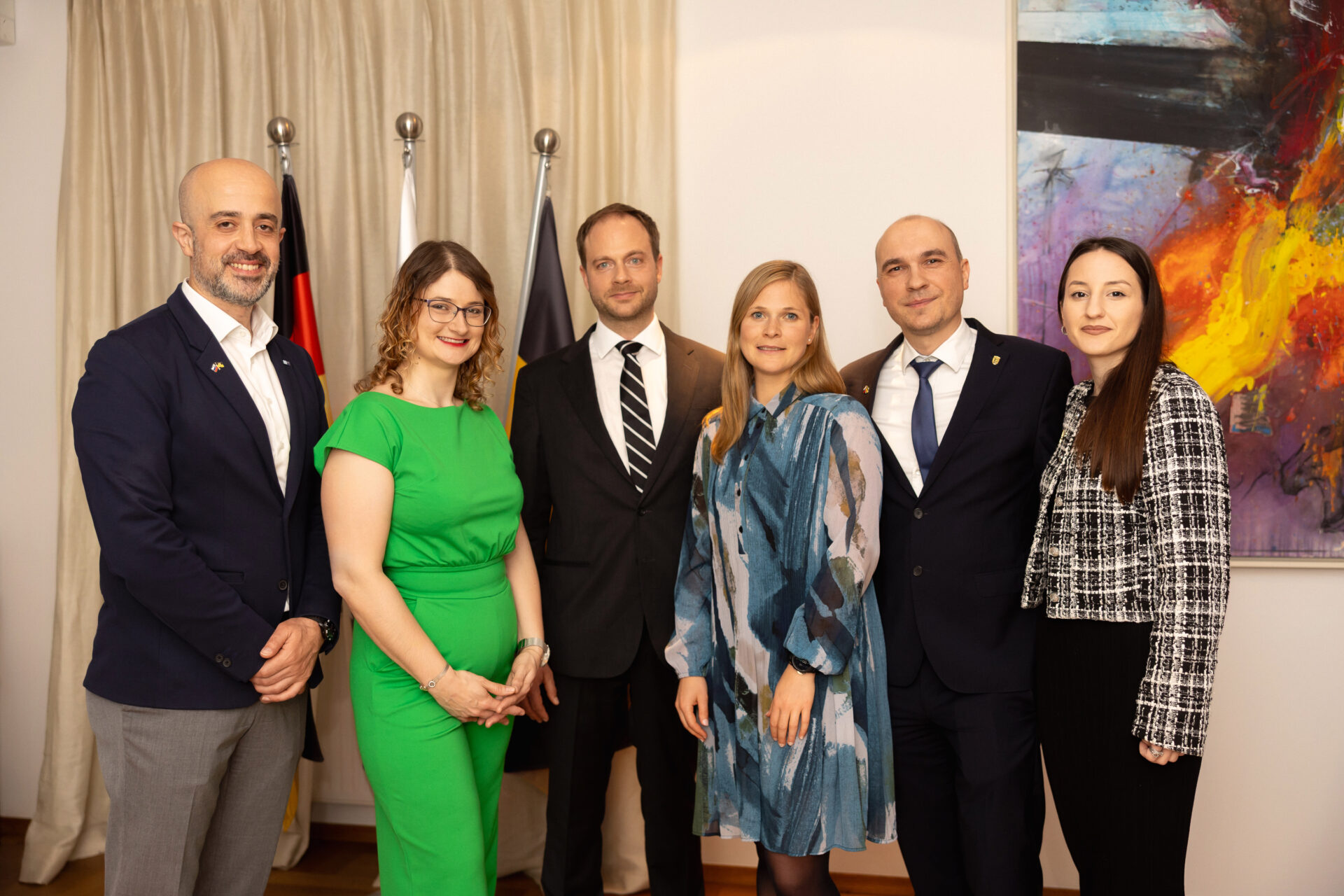
Background on the visit to Slovenia
One of the purposes of the trip was to strengthen the long-standing bilateral and multilateral relations with Slovenia, which have existed for some time within the framework of the EU Strategy for the Danube Region (EUSDR). In addition to political meetings, the focus was on intensive technical discussions at the IRCAI—the International Research Center on Artificial Intelligence under the auspices of UNESCO —as well as at the Technology Park Ljubljana, home to Slovenia’s burgeoning startup scene.
Small and medium-sized enterprises in Baden-Württemberg are currently grappling with the question of which business challenges AI-based solutions can address, which partners to collaborate with for implementation, and under what legal framework these solutions can be deployed. What is often underestimated in this context is that many crucial developments do not originate in a local context, but rather in an international one. This is because artificial intelligence is evolving dynamically across national borders—with direct implications for the competitiveness, value creation, and innovative capacity of small and medium-sized enterprises.
Furthermore, scientific studies show that large, knowledge-based economies in particular can benefit disproportionately from AI. A key factor here is the speed at which knowledge spreads locally and can be leveraged economically—including how quickly companies in Baden-Württemberg’s export-dependent SME sector can adapt. For us as the AI Alliance, it is therefore essential to disseminate knowledge generated at the national level across the region and to view internationalization as a strategic priority.
Rooted in the region, connected across regions
Only if we, as the AI Alliance, are firmly rooted in our local communities while also maintaining a nationwide network can we fully harness the potential of artificial intelligence—for our members, small and medium-sized businesses, and local governments alike.
After all, AI is, by definition, a cross-border field. Infrastructure, skilled workers, areas of application, and regulatory frameworks are evolving regardless of national borders. The effects are evident in changing market and competitive structures—for example, when AI-based business models of international startups become competitors to established companies or, at the same time, open up new sales opportunities. For small and medium-sized enterprises, this means that international developments do not have an abstract impact, but rather a very concrete one on business models, supply chains, and innovation processes.
International professionals and new market opportunities
The AI Alliance regions are home to a high concentration of applied research institutes, fast-growing companies, and skilled workers in sectors particularly relevant to AI—ranging from manufacturing and mechanical engineering to medical technology and robotics.
As a result, many companies—especially the so-called "hidden champions"—offer highly attractive career opportunities for international graduates as well. They can apply their theoretical AI knowledge directly to specialized products and processes. It is precisely this combination of practical relevance, technological depth, and international openness that makes Baden-Württemberg an attractive location in the global AI competition.
At the same time, international professionals bring new perspectives to businesses, research institutions, and local communities. This is also evident in concrete examples: A company in Tübingen was able to implement innovative methods in quality assurance thanks to international data science expertise. A Swabian textile company is collaborating with an Austrian startup to optimize production using AI.
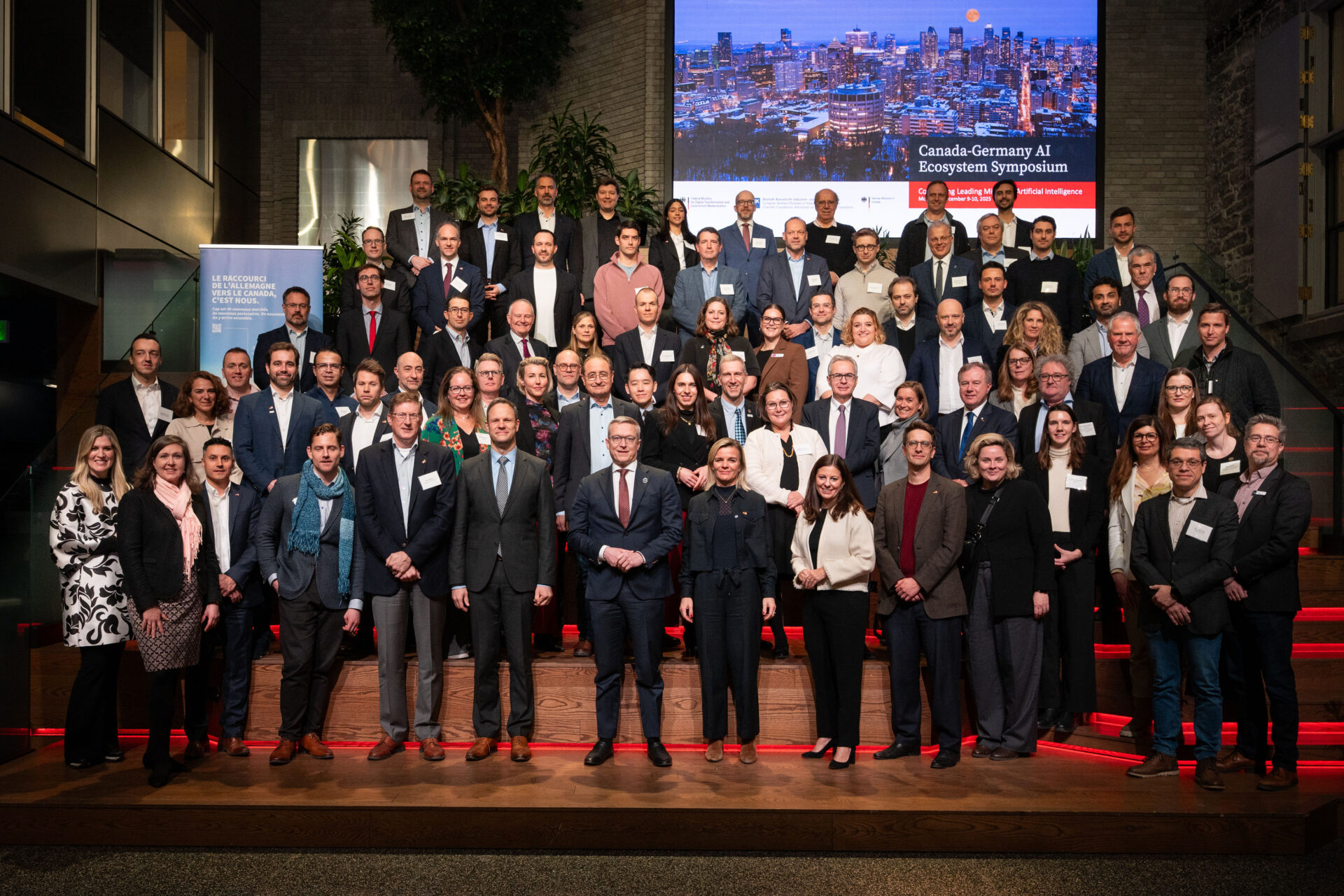
International research collaborations—such as those with partners in the Danube region or Canada—also help ensure that knowledge flows effectively between research and industry and is put into practice more quickly.
Building Bridges: How We Foster International Connections
Against this backdrop, the Baden-Württemberg AI Alliance is actively engaged in international exchange. We highlight developments, identify relevant points of contact, and create concrete opportunities for small and medium-sized enterprises. This may involve connecting companies with potential partners, providing access to international projects, or helping them navigate technological developments. The goal is to present international opportunities in a way that makes them tangible and actionable for businesses and local governments.
A real-world example: Through the AI Alliance’s international network, targeted B2B events are being organized—such as those held during the Hannover Messe—where companies from Baden-Württemberg can engage directly with AI providers from Canada or Brazil.
Many of our member companies have already recognized the importance of this international focus: For example, weber.digital GmbH provides the fastest fiber-optic network between Europe and China and offers access to Chinese AI models hosted locally in the Swabian Alb. DigitalNewX, for its part, recently established a branch in Ireland to collaborate more closely with Irish customers and scale proven AI-based and digital services to European markets.
Local stakeholders, such as the City of Karlsruhe’s Economic Development Agency, are also strengthening international partnerships—for example, in the fields of technology and AI with India—thereby providing new impetus for regional innovation processes.
Networking as the Key to Impact
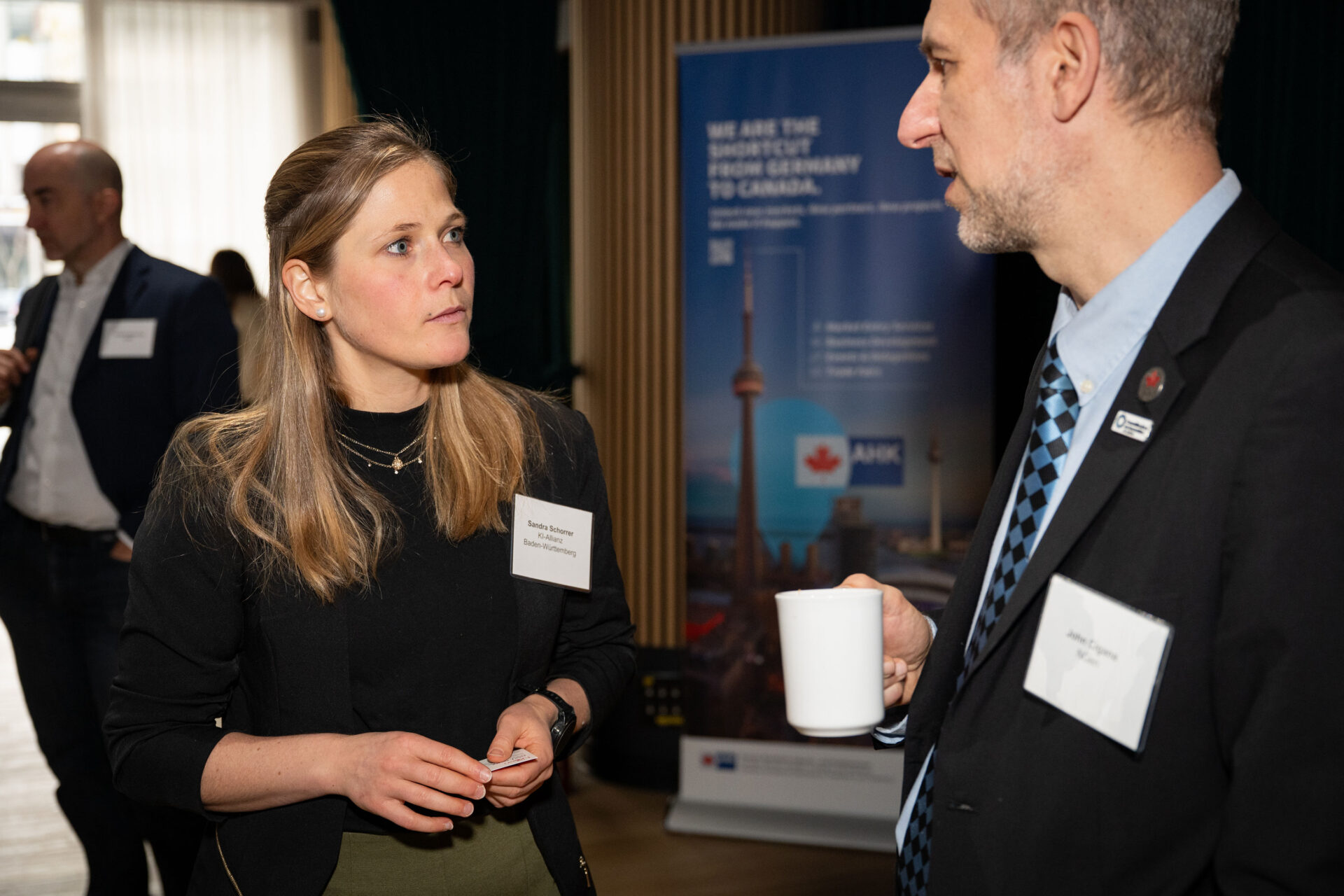
In addition to specific corporate partnerships, the AI Alliance’s project-based work also contributes to internationalization: The AI Investor Plugin connects startups with international investors; the AI data platform may also provide mobility data for cross-border services, such as in the border triangle; and through the Internationalization Office within the AI Alliance, there is close exchange and mutual support in bilateral programs, including with partners from the United Kingdom and Canada.
Delegation trips and international exchange programs also help open up new markets and identify concrete opportunities for cooperation for businesses. We have already had the opportunity to participate in insightful events in London, Dublin, and Slovenia. This exchange with international AI initiatives demonstrates just how much regional ecosystems can benefit from one another.
The targeted networking of providers and users creates synergies that sustainably strengthen both the international visibility and the innovative capacity of the regions.
Leveraging international perspectives as a competitive advantage
Those who understand how technologies, markets, and partnerships are evolving globally are better able to assess risks and capitalize on opportunities in a targeted manner. It is thus clear that international collaborations within the AI ecosystem directly influence and sustainably enhance the competitiveness of companies and municipalities in Baden-Württemberg. For small and medium-sized enterprises, internationalization is therefore a key factor for success in the adoption and scaling of AI.
This is exactly where we, as the AI Alliance, come in: as a platform, a catalyst, and a facilitator. We connect our members with international partners, pool knowledge, and help them strengthen their position within the regional and national AI ecosystem. Our goal is to translate international trends into tangible local impact—to ensure that Baden-Württemberg remains a strong, sustainable business hub.